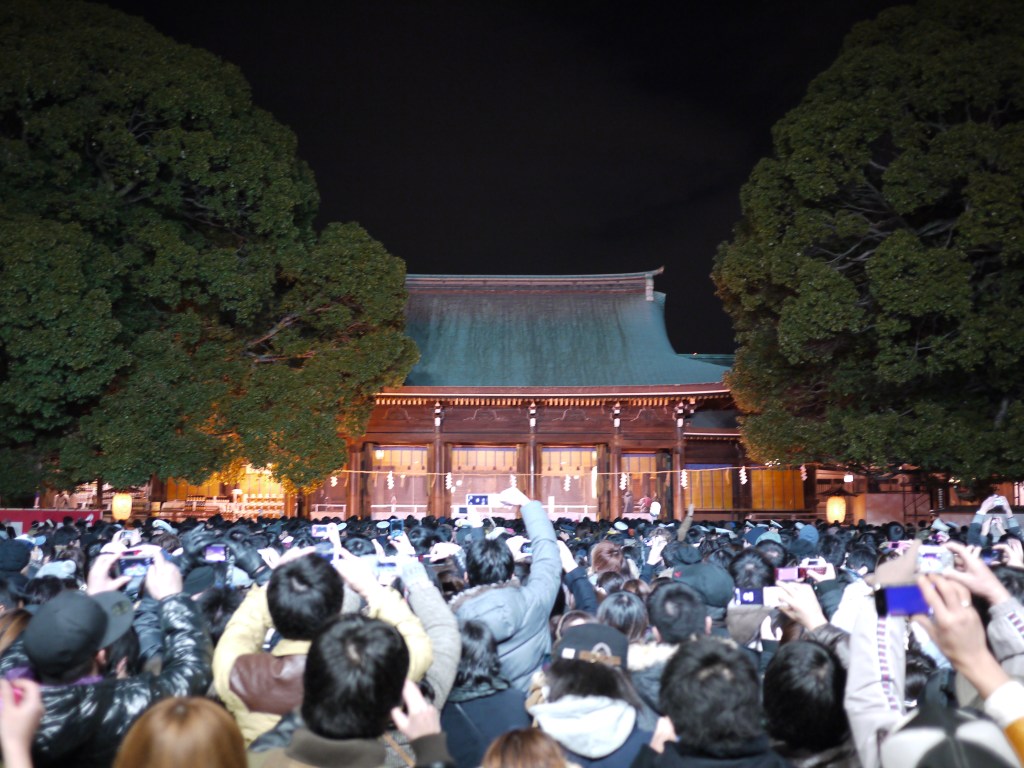
In the first days of January, millions of people in Japan put on warm coats, join a slow-moving crowd and wait, sometimes for more than an hour, to toss a coin into an offering box and pray for the year ahead. This is hatsumode, the first shrine or temple visit of the New Year, when Japan’s sacred sites are busier than at any other time.
Hatsumode looks ancient, and parts of it are. But the giant crowds are much younger than most people think, and historians link them to the railway. This guide explains where the custom came from, what its rituals mean, where the crowds gather and how to make your own first visit in 2027. Where sources disagree, we say so.
In this article
- What is hatsumode?
- How old is hatsumode? Older roots, a modern crowd
- New Year’s Eve: Joya no kane, the 108 bells
- Shrine or temple? Both are fine
- What people do at hatsumode
- Kadomatsu, shimekazari and the January fires
- 2027: the Year of the Sheep
- Japan’s busiest hatsumode sites, and what the numbers mean
- When to go: the first three days and matsu no uchi
- Practical info: hatsumode tips for visitors
- Trivia: the railway that began as a pilgrim tram
- In closing
What is hatsumode?
The word combines hatsu (“first”) and mode (“visit to a sacred place”). Kokugakuin University’s Encyclopedia of Shinto defines it as a visit to a shrine or temple at the start of the year; in the narrow sense, on New Year’s Day itself. People thank the kami (the gods and spirits of Shinto) or the buddhas for the past year and ask for health and safety in the new one.
There is no fixed ritual. Most people queue, make an offering, pray, then buy an amulet or draw a fortune. According to the encyclopedia, rural people tend to visit their local shrine, while city dwellers more often head for famous ones.
How old is hatsumode? Older roots, a modern crowd
Hatsumode is often called a timeless tradition. In fact, its roots are old, but its modern form, with millions of people crowding a few famous sites in the first three days of January, took shape in the Meiji period (1868–1912).
Older roots: toshigomori and ehomairi
The Encyclopedia of Shinto names two older customs. Toshigomori (“shutting oneself in for the year”) meant staying up through New Year’s Eve at the shrine of one’s ujigami, the local guardian kami; the encyclopedia says it is thought to be the origin of hatsumode. Ehomairi (also ehomode), popular in the Edo period (1603–1867), was a visit to a shrine or temple in the year’s eho, the “lucky direction” where the deity of the year, Toshitokujin, was said to reside. The direction was set by the traditional calendar and changed from year to year.
According to the National Diet Library, New Year visits in late Edo followed such rules: your local kami, the lucky direction, and each temple’s first “fair day” (ennichi) decided where and when you went. Kawasaki Daishi, a temple south of Edo, drew its crowds on January 21, its first fair day, after a walk of about a day.
The railway and the birth of a word
In 1872 Japan’s first railway opened between Shinbashi in Tokyo and Yokohama, with a station at Kawasaki. According to the National Diet Library, Tokyo residents began visiting Kawasaki Daishi on New Year’s Day itself, whatever the fair day or lucky direction, and by the mid-1880s this visit was established and called hatsumode. The word appears in the newspaper Tokyo Nichi Nichi Shimbun on January 2, 1885, in a notice that express trains would stop at Kawasaki for the many people making hatsumode to Kawasaki Daishi. Narita is similar: in 1868 the trip from Tokyo took two days one way, by boat and on foot; after the railway arrived in 1897, Naritasan Shinsho-ji became a leading hatsumode destination.
The historian Hirayama Noboru has studied this shift in two books in Japanese: Tetsudo ga kaeta shaji sankei (roughly “How Railways Changed Shrine and Temple Visits”, 2012) and Hatsumode no shakaishi (“A Social History of Hatsumode”, University of Tokyo Press, 2015). He argues that hatsumode was “born” when railways stretched from the cities into the suburbs, making it a truly modern custom. Railway companies competed for passengers with fare discounts, and the crowds grew.
From leisure trip to national custom
How a railway outing became a national ritual is debated. A Japanese government feature links its spread to modernization, official encouragement of shrine worship and the railways. Hirayama argues that it was not simply imposed on ordinary people as state ideology. In his account, it grew out of Edo-period lucky-direction visits, spread as leisure that railways promoted, and only then was embraced by intellectuals as a national event. Both views agree that the mass hatsumode is modern.
This explains why Meiji Jingu, founded only in 1920, became Japan’s most visited hatsumode site: Hirayama points to its superb rail access and its forest. Even ninen mairi (“two-year visit”), praying just before and after midnight, is modern. According to JR East, it arose in the Showa period (1926–1989) and depended on all-night trains.
New Year’s Eve: Joya no kane, the 108 bells
On the night of December 31, called Omisoka, temples across Japan strike their great bronze bells 108 times. This is Joya no kane, “the bell of New Year’s Eve.” A heavy wooden beam is swung against the outside of the bell, giving a deep, slowly fading tone.
Why 108? The common explanation, which temples themselves usually give, is that each strike drives away one of the 108 bonno, the worldly desires and delusions of Buddhism, such as greed and arrogance. Other explanations exist: one adds up the 12 months, 24 seasonal divisions and 72 “micro-seasons” of the old calendar. There is no single agreed answer. Some temples strike 107 times before midnight and the last after it; others begin only after midnight.
The custom of 108 strikes came from China and is commonly traced to Zen temples of the Song dynasty (960–1279); it is said to have reached Japan’s Zen temples by the Kamakura period (1185–1333). But according to the religious scholar Shimada Hiromi, it spread to temples of all schools nationwide only in the Showa period, thanks to radio. In 1927, NHK’s Tokyo radio station (call sign JOAK) began broadcasting the New Year’s Eve bell. Accounts of the details differ: some say the first broadcast came from Kan’ei-ji temple in Ueno, others that a bell was struck in the studio at first and live broadcasts from a temple began in 1929.
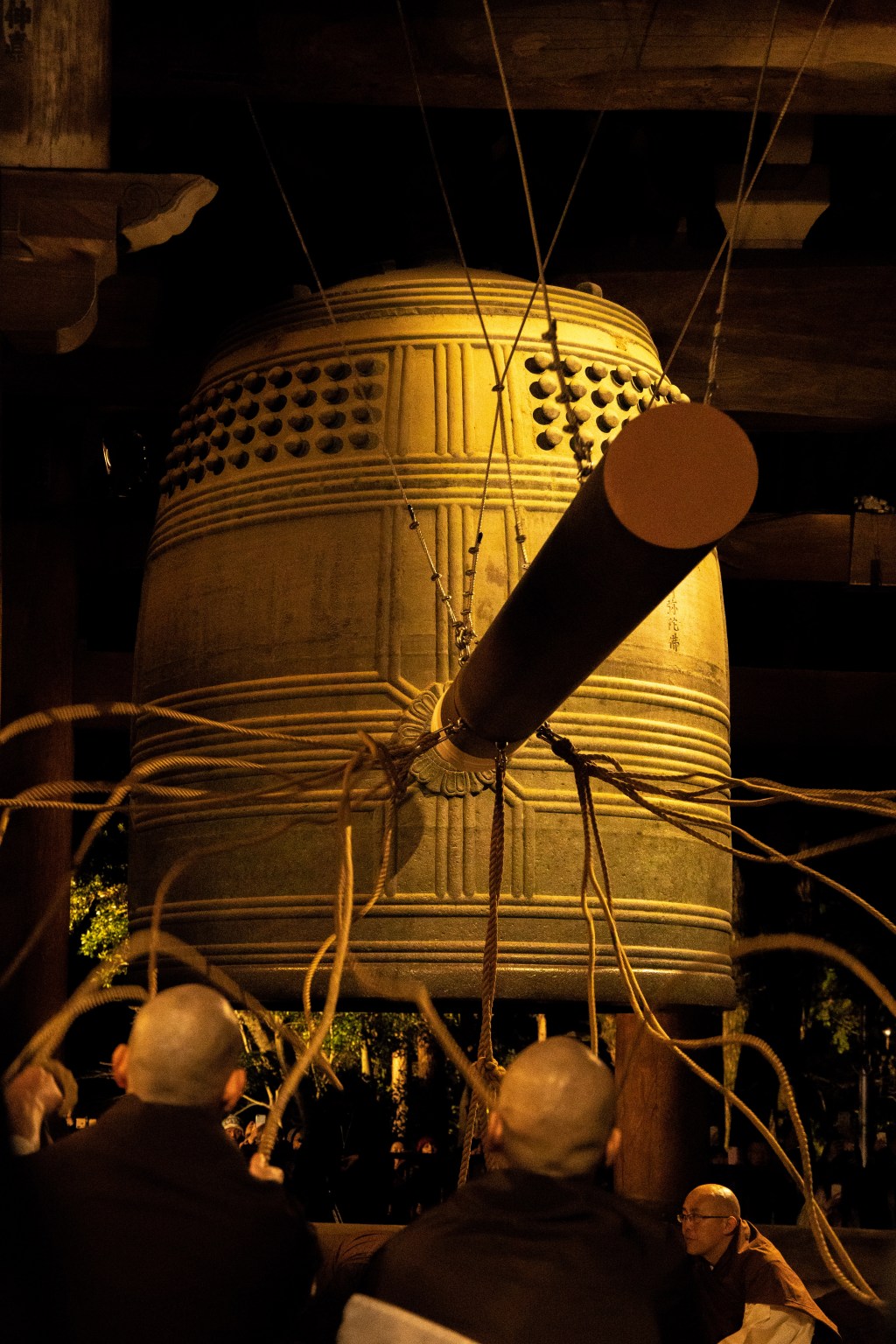
At many temples, visitors can strike the bell after queueing. At Chion-in in Kyoto, whose bell weighs about 70 tons, 17 monks pull the ropes together, and in 2025 watching required a paid ticket (3,000 yen) bought in advance; visitors there cannot strike the bell themselves. A few temples have moved the ringing to daytime or stopped it, citing aging priests or noise complaints.
Shrine or temple? Both are fine
Hatsumode does not have to be made at a Shinto shrine. Three of Japan’s busiest hatsumode sites, Naritasan, Kawasaki Daishi and Senso-ji, are Buddhist temples, and many people visit both. Kami and buddhas were worshipped together for more than a thousand years, until the government separated them in 1868 (see Shrine vs. Temple in Japan).
The difference is in how you pray. At a shrine: two bows, two claps, a silent prayer, one bow. At a temple, do not clap; put your hands together and bow. See How to Visit a Japanese Shrine for each step and How to Read a Japanese Shrine for the gates and ropes on the way in. Kawasaki Daishi is especially known for yakuyoke, protection in one’s yakudoshi, ages traditionally believed to be unlucky.
What people do at hatsumode
The first prayer and the offering
At the end of the queue, people toss a coin into the saisen-bako, the offering box, and pray. A five-yen coin is popular because, it is often said, “five yen,” go-en, sounds like the word for a fortunate connection, but any amount is fine. At Sumiyoshi Taisha in Osaka, according to the shrine’s explanation for visitors, some people throw coins so hard that they lodge in the roof. Please toss gently.
Omikuji: drawing your fortune
Omikuji are paper fortunes that rate your luck for the year, from daikichi (“great blessing”) down to kyo (“misfortune”), with advice on health, travel, study and love. Many temples, including Senso-ji, use 100 verses traditionally credited to the Tendai monk Ryogen (912–985), known as Ganzan Daishi, though the verses are thought to derive from Chinese temple oracles.
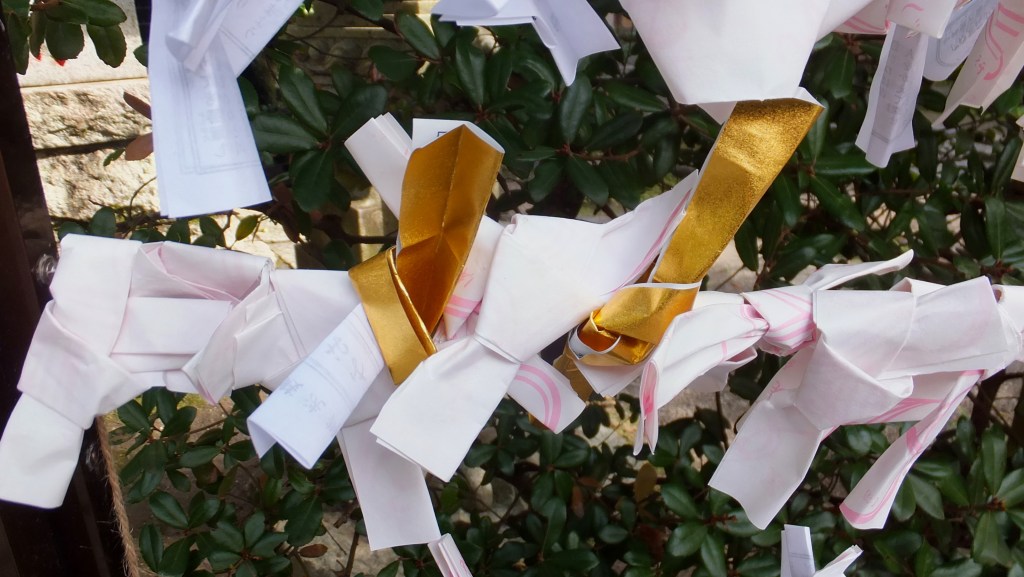
If you draw a bad fortune, tie it to the rack or branch provided and leave the bad luck behind. Good fortunes are often kept for luck, though some people tie those up too. Some places are known for strict fortunes: at Senso-ji, about 30 percent of slips are said to be kyo.
New omamori, old omamori
New Year is the busiest season for omamori, small fabric amulets for traffic safety, health, study or love. People buy new ones and bring old ones to a collection point, where they are later burned with prayers. According to explanations prepared for the Japan Tourism Agency, amulets are usually returned after about a year, typically at New Year, and should never go in the trash, because they are sacred.
Ideally, return an amulet where you got it; if not, a common courtesy is shrine items to shrines and temple items to temples. Many visitors also write a wish on an ema, a wooden plaque. See our guides to omamori and ema and to goshuin, the seals many sites issue in special New Year designs.
Hamaya and daruma
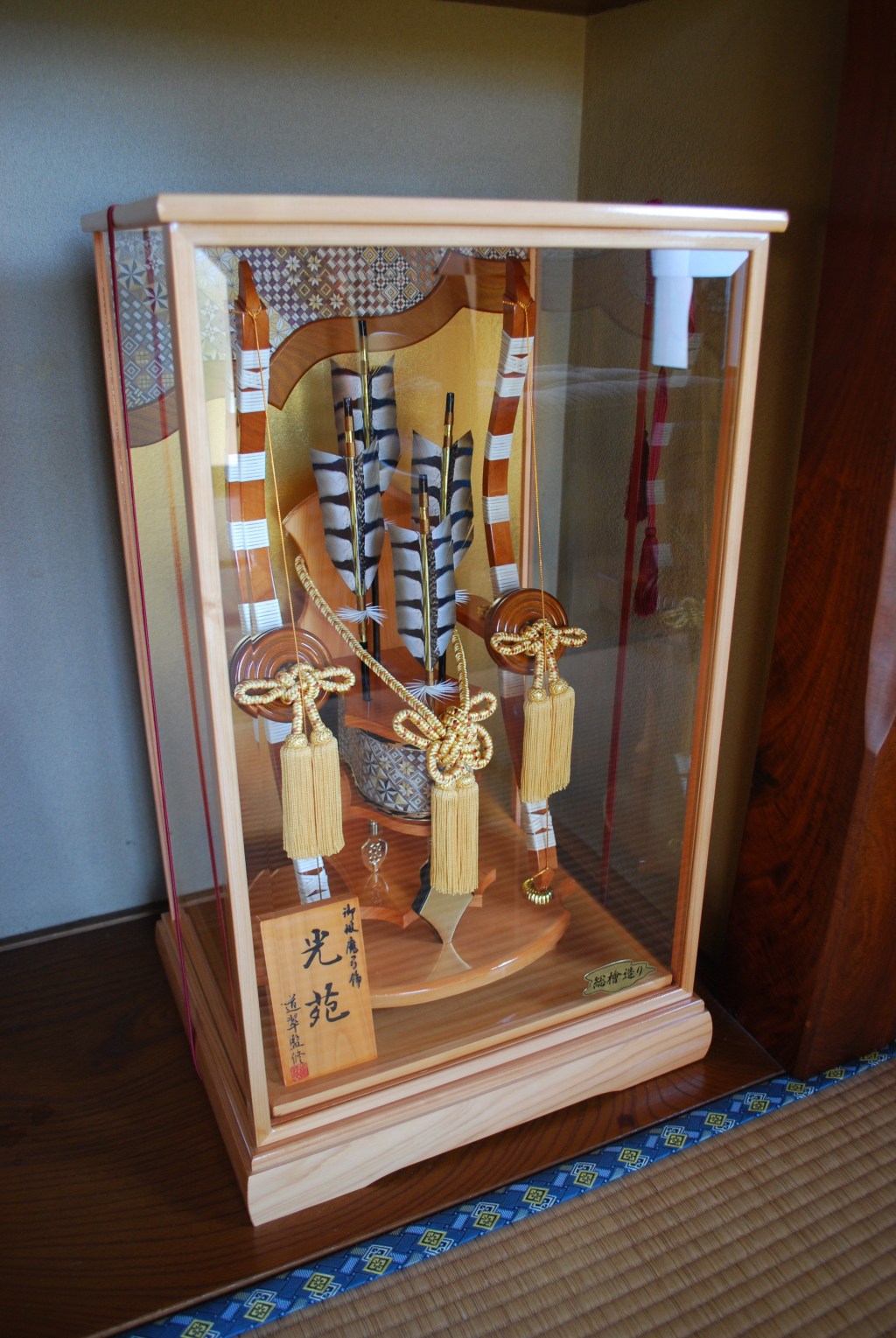
The white-feathered arrows people carry home are hamaya, “demon-breaking arrows,” sold at many shrines to ward off misfortune. According to the Encyclopedia of Shinto, from the Edo period into early Meiji, families gave hamaya with decorative bows called hamayumi for a baby boy’s first New Year; the arrow sold alone seems to be a later, shortened form. “Demon-breaking” is the popular reading of hama, but its origin is uncertain; it may be an old word for an archery target.
The round red figures with blank eyes are daruma, papier-mache charms modeled on Bodhidharma, traditionally regarded as the founder of Zen, and weighted to roll back upright. A common custom is to paint one eye when you make a wish and the other when it comes true, then return the daruma after a year to be burned. According to Gunma Prefecture’s tourism site, about 80 percent of daruma are made in Takasaki, where Shorinzan Daruma-ji holds a daruma market on January 6 and 7.
Amazake and the food stalls
Many shrines and temples serve hot amazake, a thick, sweet rice drink. The name means “sweet sake,” but the traditional kind, made from rice and rice malt, has less than one percent alcohol, according to Kikkoman’s food culture journal. Another kind, made from sake lees (the solids left over from brewing sake), contains a little alcohol, so ask which kind is served if you are driving or buying for children.
Otoshidama, osechi and toshikoshi soba
Hatsumode is part of shogatsu, the New Year season. On New Year’s Eve many families eat toshikoshi soba (“year-crossing noodles”), usually explained as a wish for long life. New Year’s Day brings osechi, boxed dishes of auspicious foods, and otoshidama, money for children. According to a Japanese government feature, otoshidama goes back to the belief that the New Year deity, the Toshigami, gave each person another year of life, called toshidama (“year spirit”).
Kadomatsu, shimekazari and the January fires
At New Year, doorways are decorated. The kadomatsu (“gate pine”) combines pine and, usually, three bamboo stalks cut at an angle. The shimekazari is made of twisted rice straw, related to the shimenawa ropes that mark sacred space at shrines. Both are for the Toshigami: they show the home is clean and ready, and the kadomatsu serves as a yorishiro, an object where a kami can settle. They go up in late December, but usually not on the 29th (nine, ku, can sound like “suffering”) or the 31st, which would be ichiya-kazari (“one-night decoration”), thought disrespectful to the deity.
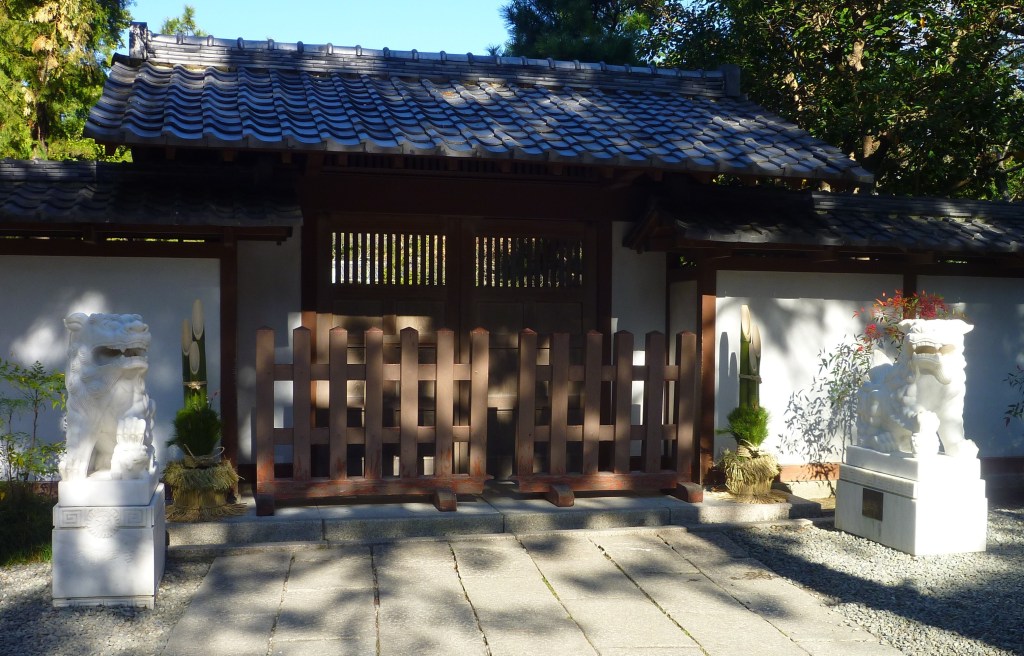
The decorations are not thrown away. In mid-January, often around January 15, shrines and communities burn kadomatsu, shimekazari, old amulets and kakizome, the year’s first calligraphy, in a bonfire known as dondo-yaki, sagicho and other local names. According to a Japanese government feature, in some regions the smoke is thought to send the Toshigami back to the mountains. People toast rice cakes over the embers for good health, and some say that if your calligraphy rises high in the flames, your calligraphy skills will improve.
2027: the Year of the Sheep
Japan uses the 12 zodiac animals, popularly called eto, inherited from China. After 2026, the Year of the Horse, 2027 is the Year of the Sheep (hitsuji; sometimes translated as goat). In the 60-year cycle it is hinoto-hitsuji, the 44th year. Expect sheep on ema, amulets, zodiac charms and New Year cards (nengajo).
Japan’s busiest hatsumode sites, and what the numbers mean
Treat crowd figures with care. For years, Japan’s National Police Agency compiled nationwide estimates of New Year crowds. Its last figures were for January 1–3, 2009; after that it stopped publishing them, and the numbers most often repeated online still come from that last list. Later figures come mainly from the sites themselves or local tourism bodies, often rounded. During the COVID-19 pandemic, sites asked people to spread out their visits, so recent years are hard to compare. All numbers below are estimates.
- Meiji Jingu (Tokyo): About 3.19 million in the 2009 list, first in Japan. Japan’s national tourism organization says over 3 million, with waits of a couple of hours. See our Meiji Jingu guide.
- Naritasan Shinsho-ji (Chiba): About 2.98 million in 2009; Chiba Prefecture’s tourism site says about 3 million. This temple of the deity Fudo Myoo was founded in 940.
- Kawasaki Daishi (Kanagawa): About 2.96 million in 2009, and close to 3 million before the pandemic, according to Bunshun. Formally Heiken-ji, it is where, according to historians, railway-era hatsumode began.
- Fushimi Inari Taisha (Kyoto): About 2.77 million in 2009, the largest in western Japan on that list. See our Fushimi Inari guide.
- Sumiyoshi Taisha (Osaka): About 2.35 million in 2009, tied for seventh on that list. The shrine’s own explanation says around two million, and an old Osaka saying holds that “the year begins at Sumiyossan,” the shrine’s affectionate local name.
The same list also ranked Tsurugaoka Hachimangu in Kamakura, Senso-ji and Atsuta Jingu in Nagoya in the top ten. Counting methods are rarely explained. The lesson: at any of these places in the first three days, expect huge crowds, police-managed queues and long waits.
When to go: the first three days and matsu no uchi
The peak is sanganichi, the first three days of January, when most offices close. But many people say hatsumode can be made during matsu no uchi, “while the pines are up,” when the Toshigami is believed to be visiting. It is commonly said to end on January 7 in the Kanto region around Tokyo, and on January 15, the “little New Year” (koshogatsu), in Kansai and many other areas.
Why the difference? Explanations vary. The late-Edo book of customs Morisada Manko says that Edo once took its decorations down on the 16th, but that a shogunate order of 1662 moved this to the 7th, and it explains the change by the city’s frequent fires. Another popular explanation links it to the death of the shogun Tokugawa Iemitsu on the 20th day of the fourth month of 1651: the 20th became a day of mourning, so kagami biraki, the ceremonial breaking of the New Year rice cakes, moved from January 20 to January 11, and the pines are said to have come down sooner to match. Either way, the change did not spread to Kyoto and Osaka.
Hirayama notes that crowding into the first three days has no strong religious basis, and suggests that a local shrine will do just as well. A quiet visit on January 10 is still a first visit.
Practical info: hatsumode tips for visitors
- Beat the worst crowds: The busiest times are around midnight and the daytime of January 1. Early mornings and the days from January 4 are usually calmer. A neighborhood shrine or temple offers the same rituals with a fraction of the wait.
- New Year’s Eve trains in Tokyo: All-night service has been cut back since the pandemic. For 2025–26, JR East ran all night on six Tokyo-area lines, including the Yamanote Line, and Keisei and Keio on some lines; Tokyo Metro, Toei Subway, Odakyu, Seibu and Tobu did not. Plans for 2026–27 had not been announced at the time of writing (October 2026) and usually appear in December, so check each railway’s website.
- Check special arrangements: Hours, one-way routes and bell-ringing rules change at New Year, and some temples need advance booking for Joya no kane. Meiji Jingu usually stays open through the night of December 31, but check the official website of any site you plan to visit.
- Bring cash: Offerings are coins, and amulets, fortunes and food stalls are often cash only. Some banks and ATMs close over the holidays, so carry small change from late December.
- Dress for the cold: You may stand still for an hour or more. Wear layers, a hat and gloves.
- Crowd etiquette: Follow police and staff directions, even when they pause the queue. Do not push or stop for photos in the line, and toss your coin gently instead of throwing it from far back. Eat at the side, not while walking.
- Holiday closures: Many museums, restaurants and shops close on some days from about December 29 to January 3, especially January 1. Long-distance trains are packed around December 29–31 and January 2–4.
Trivia: the railway that began as a pilgrim tram
Keikyu, the railway whose red trains run to Haneda Airport, began as a line for temple visitors. According to the National Diet Library, the company was founded in 1898 as the Daishi Electric Railway, named after Kawasaki Daishi. On January 21, 1899, the temple’s first fair day of the year, it opened a short electric line from near Kawasaki Station to the temple. Japanese encyclopedias describe it as the oldest electric railway in the Kanto region. That first line is today’s Keikyu Daishi Line, which keeps the temple’s name and still carries crowds there every New Year.
In closing
Hatsumode joins old ideas to modern habits. Greeting the year’s deity, staying up at the local shrine and walking toward the lucky direction go back centuries; the vast crowds and midnight trains belong to the railway age, and radio helped turn a Zen temple custom into the sound of New Year’s Eve.
You do not need the most famous site or the busiest hour. Listen for the bells, visit a shrine or temple near your hotel, draw a fortune and take home a small amulet. You will be sharing a custom millions in Japan still make their own.


コメントをどうぞ