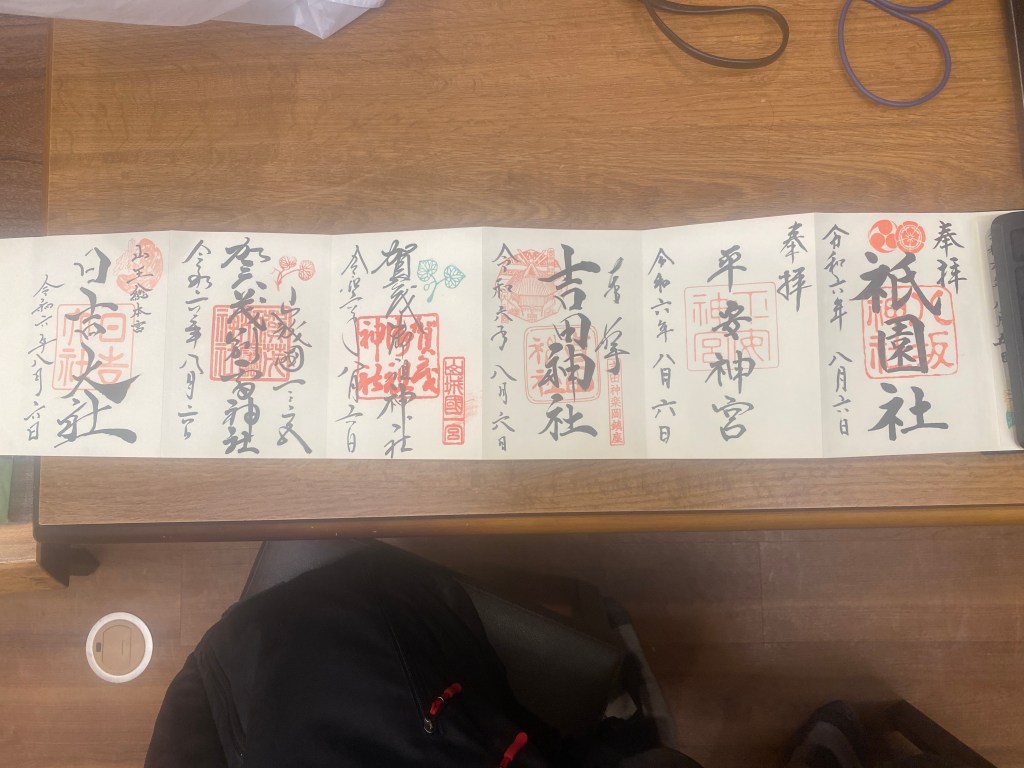
Many visitors leave a Japanese temple or shrine holding a page of sweeping black calligraphy stamped with a vivid vermilion seal, and file it away as a particularly elegant souvenir stamp. It is something far older and stranger than that. A goshuin (御朱印, literally an “honorable red seal”) began life as a receipt—proof that a pilgrim had copied out a sacred text and offered it to the gods or the Buddhas. It was evidence of prayer, not evidence of visiting.
Understanding that origin changes the object in your hand. This guide traces where goshuin came from, how to read the ink and seals, why temple seals and shrine seals differ, and how to receive one in the spirit it was meant for—rather than as a line in a checklist.
In this article
- What a goshuin really is
- From copied sutra to seal: the origin
- The pilgrimage that gave goshuin their shape
- How to read a goshuin
- Temple seals versus shrine seals
- The goshuincho: a book you carry for years
- The modern boom—and its shadow
- How to receive a goshuin with respect
- Trivia: the seal that got its name in the 1930s
What a goshuin really is
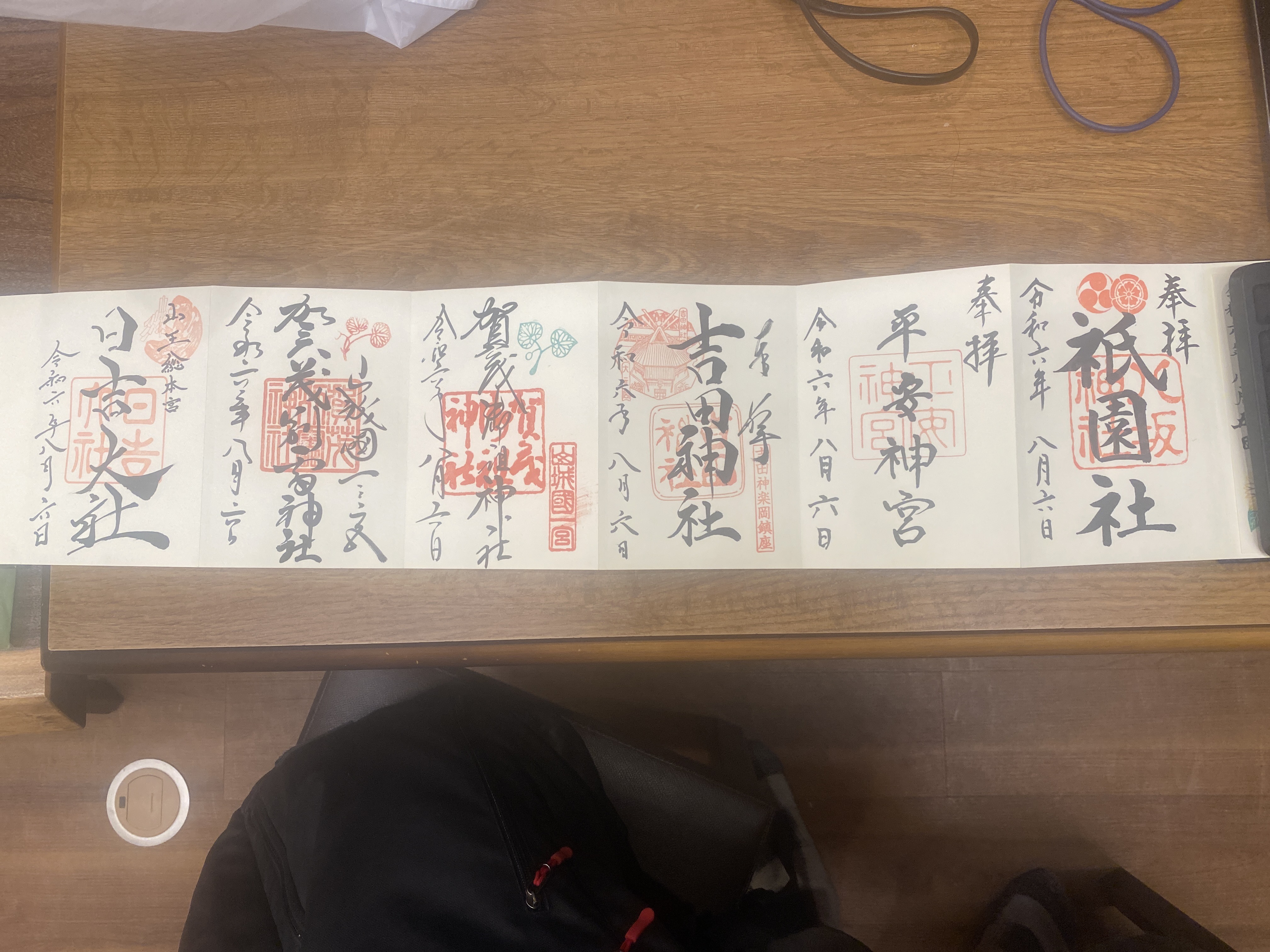
A goshuin is a seal of worship given at a Buddhist temple or Shinto shrine (for the difference between the two, see our guide to shrines versus temples). Typically an attendant brushes it directly into your personal book while you wait: the name of the temple or shrine, the name of its principal Buddha or enshrined deity, the date of your visit, and—pressed over the ink—one or more red seals unique to that place.
It is often described in English as a “stamp,” which is where the misunderstanding starts. The essential point is that a goshuin marks a completed act of worship. It is closer in spirit to the amulets and votive plaques you receive at the same counters—objects that carry a relationship with the sacred—than to the collectible stamps found at train stations. The most reliable way to keep that distinction alive is to know how the practice began.
From copied sutra to seal: the origin
The ancestor of the goshuin is a practice called nokyo (納経), which means “to dedicate a sutra.” A worshipper would copy out a Buddhist scripture by hand—an act of devotion in itself—and offer the copy to a temple. In return, the temple issued a certificate of receipt (納経請取状, nokyo uketorijo) confirming that the offering had been received. In other words, the earliest goshuin was a spiritual receipt.
This is worth pausing on, because a popular explanation gets it wrong. It is often said that pilgrims copied a short text such as the Heart Sutra as a quick offering. Historically, the scripture involved was frequently the far longer Lotus Sutra—tens of thousands of characters—copied and deposited as a serious undertaking rather than a brief gesture. A particularly striking example is the rokujurokubu (六十六部), wandering ascetics who carried copies of the Lotus Sutra to be deposited at sacred sites across all sixty-six historical provinces of Japan. By the Muromachi period (1336–1573) these pilgrims were receiving written certificates as proof of each deposit, and by the Edo period (1603–1868) those certificates had become handwritten entries in dedicated books.
One more correction is worth making, because it sharpens the picture. It is tempting to assume the goshuin began because temples stamped a red seal. Careful research on surviving records suggests the opposite: the earliest nokyo entries often carried no red seal at all, and the decorative vermilion mark grew in importance only gradually. What defined the practice from the start was the written record of an offering—the seal came to dominate later.
Even the name is surprisingly recent. The catch-all term “goshuin” for these temple and shrine seals only became common in the late 1930s, during an earlier craze for collecting them. Before that, people spoke of nokyo, nokyo-in (the seal), or simply the temple’s seal.
The pilgrimage that gave goshuin their shape
If nokyo supplied the meaning, pilgrimage supplied the format. As ordinary people began traveling temple circuits in the Edo period, temples standardized what they wrote: the name, the principal image, the date, and the seal, entry after entry, page after page. Pilgrimage turned private devotion into what one might call a culture of “recording prayer while walking.”
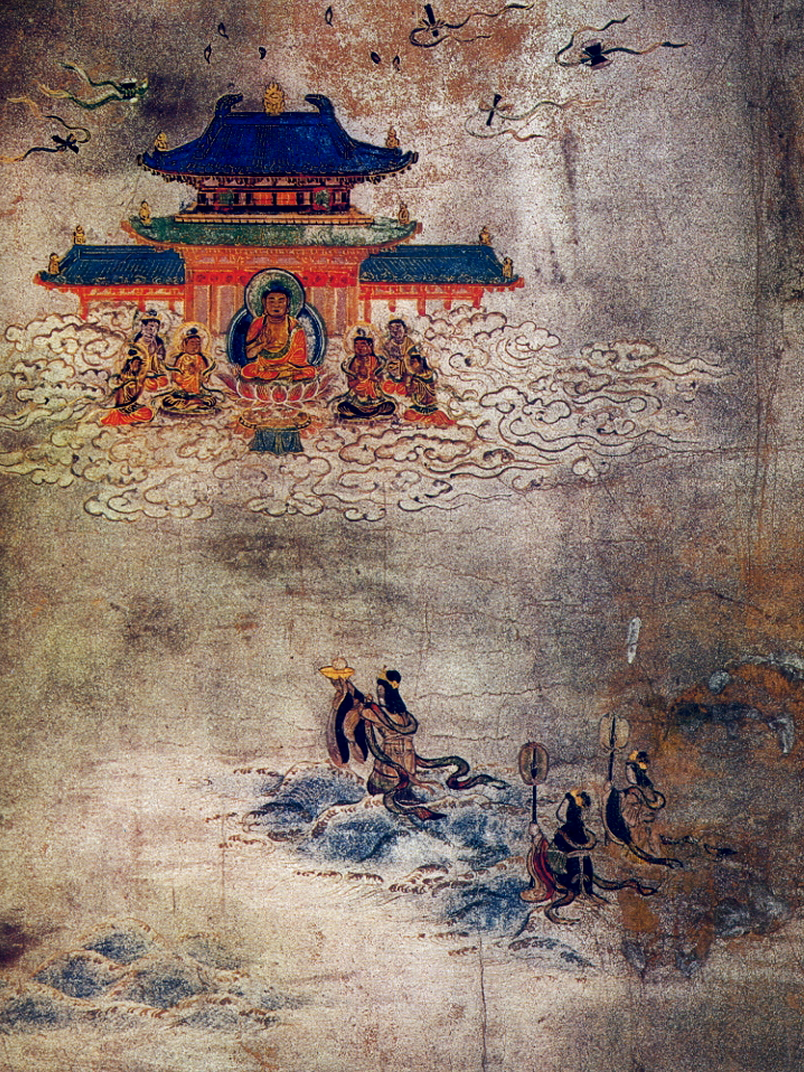
The circuit most bound up with this history is the Saigoku Sanjusan-sho (西国三十三所), a route of thirty-three temples—plus three extra bangai temples—across the Kansai region, every one of them dedicated to Kannon, the bodhisattva of compassion. It is regarded as Japan’s oldest pilgrimage. According to legend, a monk named Tokudo Shonin established it in the year 718 after a vision in which Enma, the king of the underworld, sent him back to the living with thirty-three seals and instructions to found thirty-three Kannon sites. The pilgrimage is said to have been revived centuries later by the retired Emperor Kazan. Historians treat the founding legend as just that—a legend—but firm records of the thirty-three-temple circuit appear from the eleventh century onward, which is early enough to make it the wellspring of Japanese pilgrimage culture. On such circuits, pilgrims still copy or offer a sutra, pay a small offering, and receive the temple’s seal impressed into their book.
That older, stricter tradition survives most visibly on the Shikoku pilgrimage of eighty-eight temples associated with the monk Kukai, founder of Shingon Buddhism (his mountain monastery is the subject of our guide to Koyasan). There, the book is usually called a nokyocho (納経帳) rather than a goshuincho, and the seal it holds is understood as certifying an act of devotion—reciting, bowing, offering—rather than simply marking attendance.
How to read a goshuin
A goshuin combines two elements: bokusho (墨書), the black-ink calligraphy, and shuin (朱印), the red seals stamped over it. Once you know what to look for, a page that seemed like beautiful chaos resolves into a clear statement.
Near the top right you will often find the word hohai (奉拝), meaning “reverently worshipped”—a small but telling phrase, since it records what you did rather than where you were. The center usually carries the most important name: at a temple, the principal image of worship (for example, Amida Nyorai or Kannon); at a shrine, the name of the shrine or its enshrined deity. The date of your visit is written to the left. Over this calligraphy sit the red seals: at temples, frequently a sacred “treasure seal” (宝印, hoin); at shrines, the shrine’s own seal or crest.
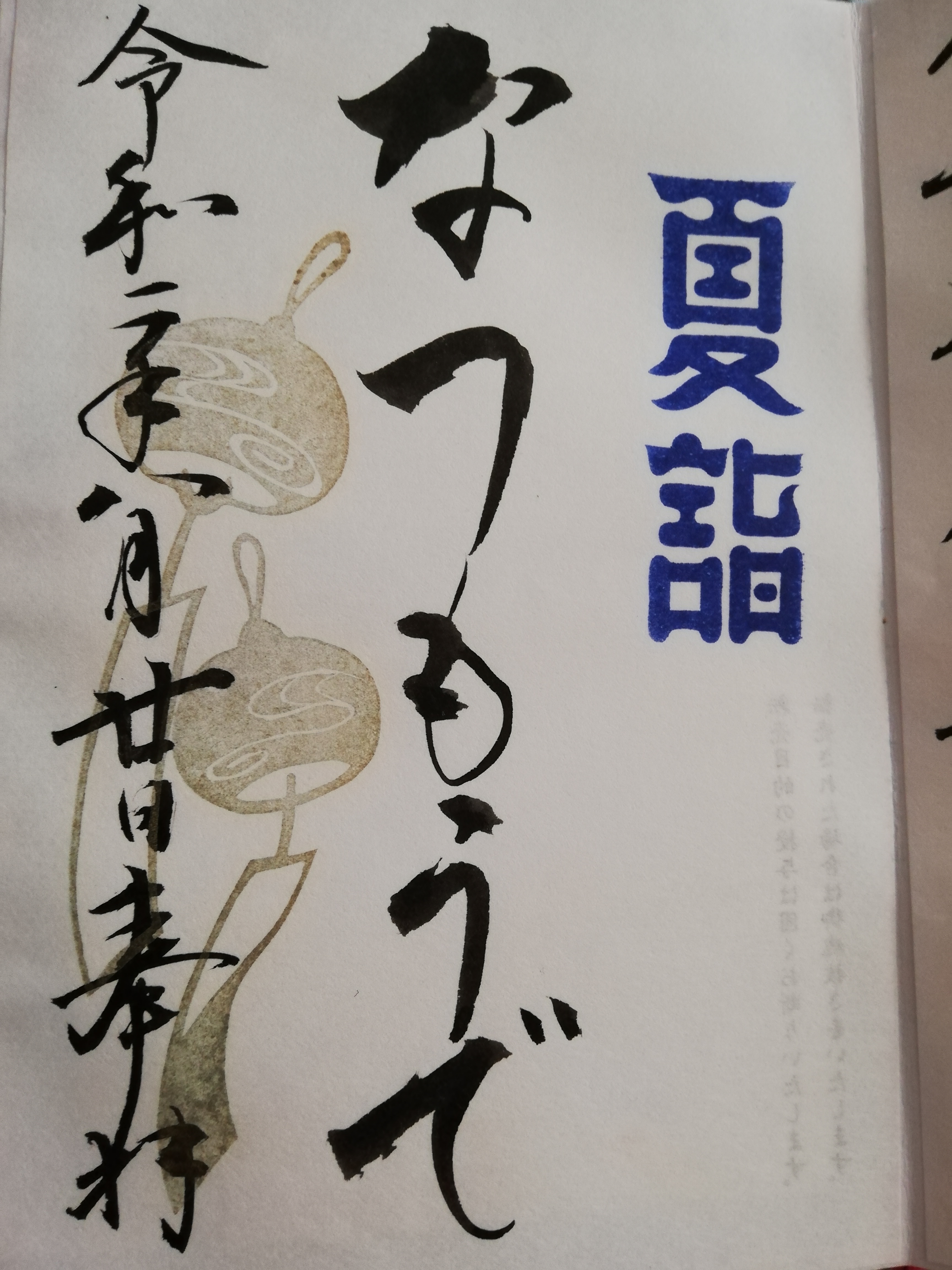
Because each one is brushed by hand in the moment, no two are ever identical—the same temple, the same attendant, a different day, and the character shapes shift. That individuality is part of why goshuin are treasured, and part of why asking for a specific style misunderstands the gift.
Temple seals versus shrine seals
Both Buddhist temples and Shinto shrines issue goshuin today, but the two traditions arrived at the practice differently, and it shows. Temple goshuin tend to be more elaborate: alongside the temple name they may record the principal Buddhist image, the sect, and the temple’s honorific “mountain name” (山号, sango), a holdover from the days when major temples stood on sacred peaks. This richness reflects the practice’s Buddhist roots in sutra offering.
Shrine goshuin are often simpler, centering on the shrine’s name or its enshrined kami together with a crest. The extreme case is Ise Jingu, Shinto’s most sacred site, whose goshuin is famously austere—little more than a single seal and the date, with none of the flourish found elsewhere. That restraint is itself a statement about Ise’s character.
That shrines offer goshuin at all is a reminder of how entangled the two religions have long been—the centuries of fusion between gods and Buddhas in which a practice born at temples could migrate naturally to shrines. In fact, records of shrine “nokyo” survive from as early as the eighteenth century, so the shrine seal is not merely a modern imitation of the temple one.
The goshuincho: a book you carry for years
The goshuin is inseparable from the book that holds it, the goshuincho (御朱印帳). The classic form is an accordion-folded book (jabara, 蛇腹) that opens out into one long continuous strip—the direct descendant of the pilgrim’s nokyocho—though stapled and thread-bound versions also exist. Covers range from plain indigo cloth to designs unique to a particular temple or shrine.
A practical question many collectors face is whether temple and shrine seals may share one book. In everyday practice, mixing them is generally accepted. However, some temples—and a smaller number of shrines—will decline to write in a book that already contains the other tradition’s seals, so committed pilgrims often keep two books, or reserve a dedicated nokyocho for a formal circuit like Shikoku. If you plan to walk a numbered pilgrimage, it is worth buying its book at the first temple.
When you have no book with you, many places offer a kakioki (書き置き): a goshuin pre-written on a loose sheet of paper that you can later paste into your own book. Kakioki have also become the standard way to distribute elaborate seasonal and limited designs, which brings us to the practice’s complicated present.
The modern boom—and its shadow
Goshuin have surged in popularity, especially since the 2010s, propelled by television and social media and by a wave of enthusiasts—often nicknamed “goshuin girls” (御朱印ガール). Temples and shrines responded with beautiful seasonal and limited-edition goshuin, frequently in color, sometimes as small works of art. The revival has drawn many people to places they might never have visited.
It has also created friction that gets to the heart of what a goshuin is. Attendants report visitors who treat the book as a stamp rally, asking whether a given seal “completes the set.” Limited goshuin have been resold on flea-market apps at several times their offering price—one shrine began writing each recipient’s name and number on the back to discourage resale, and another stopped distributing a festival goshuin after its staff were abused by people demanding it. A minority have even torn pages out of books to obtain a special design.
None of this is a reason to avoid collecting goshuin—far from it. But it explains why many priests now gently emphasize the same point the history makes on its own: the seal is a trace of worship, and it means most when the worship comes first.
How to receive a goshuin with respect
The etiquette follows naturally once you see the goshuin as a record of prayer rather than a prize. A few simple habits keep you on the right side of it:
- Worship first. Visit the main hall and pay your respects before going to the goshuin counter, which is usually near the temple or shrine office. Our guide to visiting a shrine walks through the steps.
- Have your book open and ready. Hand over your goshuincho open to the page you want used, and mention if you would prefer a kakioki sheet instead.
- Offer the fee quietly. A goshuin usually costs around 300 to 500 yen, with elaborate limited editions running higher; small change is appreciated. Treat it as an offering, not a purchase.
- Wait calmly and don’t dictate the design. The attendant is writing by hand; let the result be what it is. Photographing someone mid-brushstroke without asking is best avoided.
- Accept that some places don’t offer them. Not every temple or shrine issues goshuin, and some pause during busy festivals. A polite acceptance is part of the etiquette.
Trivia: the seal that got its name in the 1930s
For a practice with roots a thousand years deep, the word “goshuin” is remarkably young. Researchers who have studied surviving records suggest the term only settled into common use for temple and shrine seals in the late 1930s—during an earlier collecting boom, several generations before the current one. There is also a persistent myth worth retiring: that Jodo Shinshu, the largest school of Japanese Buddhism, refuses to issue goshuin on doctrinal grounds. In fact, Shinshu temples were issuing their own devotional records as far back as the Edo period. The history of the goshuin, it turns out, keeps overturning the neat stories told about it.
In closing
A goshuin rewards the traveler who slows down. Held as a collectible, it is a pretty page; understood as a receipt for prayer, it becomes a record of where you stood, what you honored, and the particular hand that brushed the ink that day. Buy a goshuincho early in your trip, pray before you present it, and you will come home with something closer to a diary of devotion than a sheet of stamps—which is exactly what a thousand years of pilgrims intended.


コメントを残す