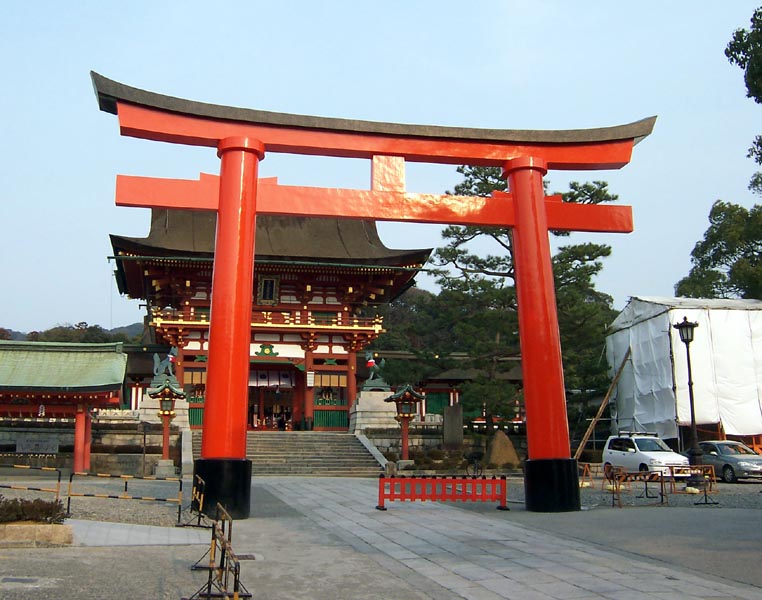
Have you ever stood at a Japanese shrine unsure how to pray? The good news: shrine etiquette is simple, and once you know a few points, anyone can worship with confidence. Better yet, each gesture has a meaning, and knowing it makes the visit far richer. This guide walks you from the torii gate to the temizu purification, the “two bows, two claps, one bow” prayer, and how temples differ.
In this article
- Before you start
- 1. Passing through the torii gate
- 2. Purifying at the temizu
- 3. Praying: two bows, two claps, one bow
- How temples differ: no clapping
- A few more courtesies
- In closing
Before you start
Shrine etiquette is less a set of strict rules than “small gestures to show respect to the kami (the gods).” You don’t have to be perfect. Just knowing the basic flow — bow at the torii, purify at the temizu, pray at the hall — lets you worship without hesitation, and we’ll add the meaning behind each step.
1. Passing through the torii gate
The torii gate at a shrine’s entrance marks the boundary between the everyday world and the sacred grounds. Before passing through, give a small bow — a greeting that says, “I’m about to enter the gods’ space.” One more point: the center of the approach (sando) is considered the kami’s path, so it’s polite to walk a little to the side rather than straight down the middle. Curious what the torii, the stone guardians and the straw ropes you pass actually mean? See How to Read a Japanese Shrine.
2. Purifying at the temizu
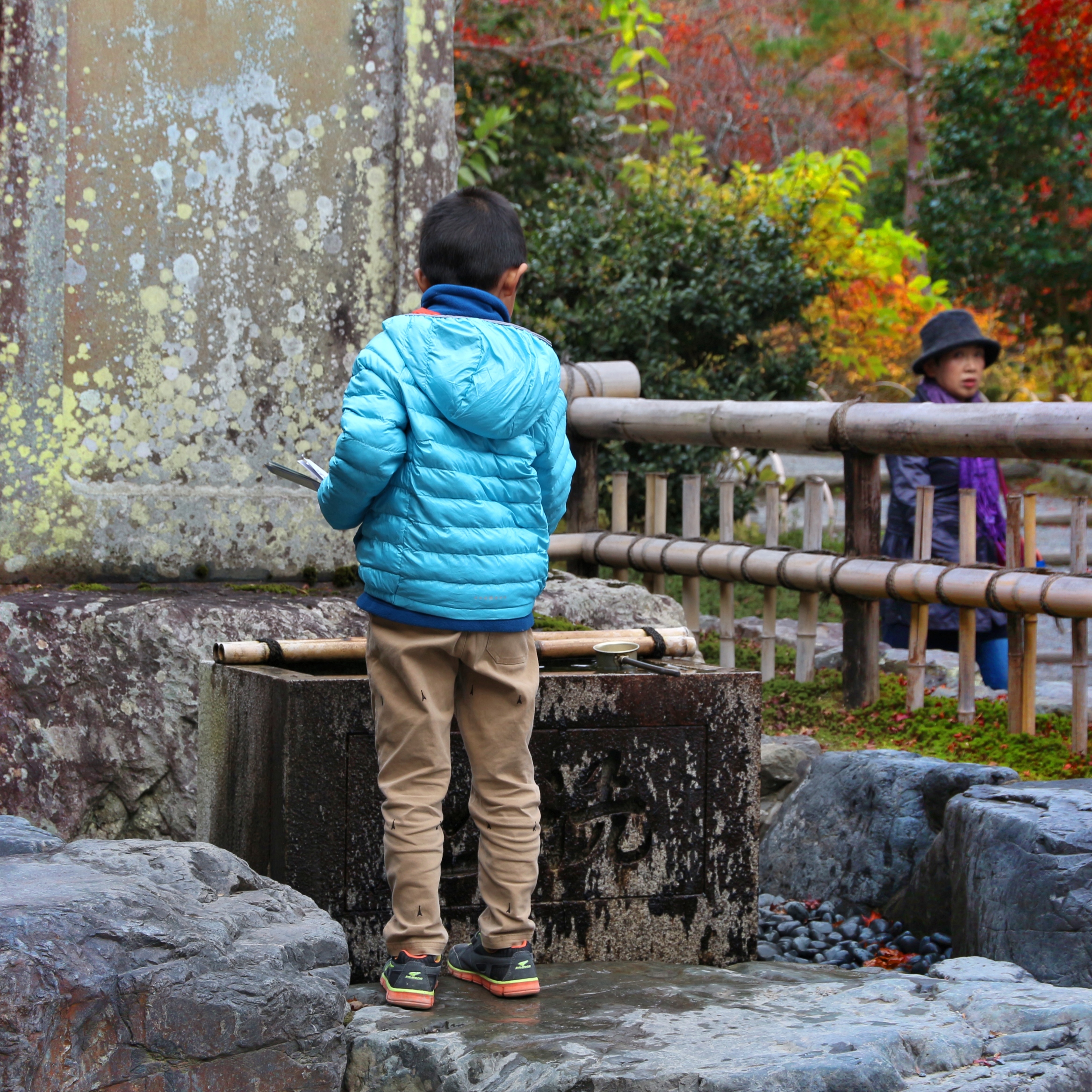
Partway along the approach is the temizuya (also called chozuya), a water pavilion for purification. Here you cleanse your hands and mouth before praying, using one ladleful of water in this order: (1) hold the ladle in your right hand, scoop water, and rinse your left hand; (2) switch the ladle to your left hand and rinse your right hand; (3) back to the right hand, pour water into your cupped left hand and rinse your mouth (never touch the ladle to your lips, and don’t drink); (4) rinse your left hand again; (5) tip the ladle upright so the last water runs down and cleans the handle. Do it all with that first scoop.
3. Praying: two bows, two claps, one bow
At the hall of worship (haiden), the shrine prayer is “two bows, two claps, one bow“: (1) gently place your offering (saisen) in the box — don’t throw it; (2) ring the bell if there is one; (3) bow deeply twice; (4) clap twice at chest height; (5) with your hands together, silently offer your wish or thanks; (6) bow deeply once more. The claps are said to call the kami and show respect. It’s considered polite to first give your name and where you’re from in your heart, and to add a word of everyday gratitude.
How temples differ: no clapping
Take care: at temples, the etiquette differs in one big way — you do not clap. Quietly place your offering, press your hands together (gassho), bow, pray silently, and bow again. If there’s a large incense cauldron before the main hall, it’s customary to waft its smoke over yourself. (For more on telling shrines and temples apart, see our guide, Shrine vs. Temple in Japan.) Just remember: clap at shrines, hands together at temples.
A few more courtesies
Beyond the steps, a few things help everyone enjoy the visit. Be quiet on the grounds, and keep eating and drinking to a minimum. Don’t block the center of the approach (the kami’s path) for long. As for photography, the grounds are often fine, but the inside of the halls and the sacred object itself are usually off-limits, so follow the signs. Removing your hat to pray is more polite. Approach it as you would entering someone’s home, and you’ll naturally avoid any discourtesy.
In closing
Shrine etiquette is simple once you know it: bow at the torii, purify at the temizu, and pray with two bows, two claps, one bow. With these basics you can worship confidently at any shrine in Japan. And knowing the meaning turns sightseeing into a moment of experiencing Japan’s living faith. Next time you pass through a torii, remember this guide — your trip will be one memory deeper.


コメントを残す