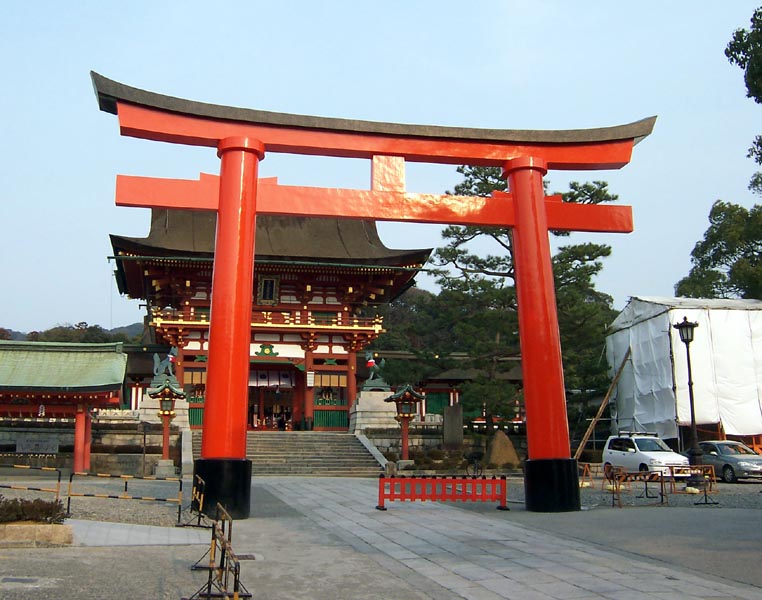
Travel anywhere in Japan and you meet two kinds of holy place: one you enter through a bright red gate, and one filled with incense smoke and large statues of the Buddha. The first is a shrine, the second a temple. Most guides stop at a simple rule: “gate means shrine, Buddha statue means temple.” That rule is true, but it is only the doorway. In this article we go further, and ask why shrines and temples were born separately, why they shared the same grounds for more than a thousand years, and how Japanese people today quietly use one for some moments in life and the other for the rest. By the end, the next gate you walk through will be something to read, not just something to photograph.
In this article
- The short answer: shrines are Shinto, temples are Buddhist
- A foreign faith meets the local gods
- A thousand years under one roof: the invention of shinbutsu shugo
- The Meiji split: the moment separate was invented
- The division of roles: shrines for joy, temples for farewell
- What shrines and temples mean to Japanese people today
- For visitors: a practical way to tell them apart
- In closing: how knowing the difference changes your visit
The short answer: shrines are Shinto, temples are Buddhist
The deepest difference between a shrine and a temple is the religion behind it. A shrine belongs to Shinto, Japan’s indigenous faith. Shinto reveres countless kami (gods or spirits believed to dwell in nature and in ancestors) found in mountains, rivers, rocks, and trees. It has no single founder and no single holy book like the Bible or the Quran. It was simply part of life on these islands long before writing arrived.
A temple, on the other hand, belongs to Buddhism. Buddhism was born in India and reached Japan in the 6th century, traveling through China and the Korean peninsula. Unlike Shinto, Buddhism arrived with a historical founder (the Buddha, Siddhartha Gautama), a vast body of scripture, systematic teachings about reincarnation and the afterlife, and a tradition of ordained monks who trained and studied. Shrines came to care for the blessings of this world, while temples came to care for enlightenment and the soul after death. That division of labor grows directly out of this difference in origins.
A foreign faith meets the local gods
Buddhism officially reached Japan in the 6th century. Tradition dates it to the year 538 (some sources say 552, and the exact year is debated), when the kingdom of Baekje on the Korean peninsula sent Buddhist statues and scriptures to the court of Emperor Kinmei.
This created a hard problem. The Japanese already honored their local kami, and now a completely different foreign religion had arrived. Rather than throwing one away, they chose a different path: they decided that both could be true. That single choice would shape the relationship between shrines and temples for more than a thousand years.
A thousand years under one roof: the invention of shinbutsu shugo
The blending of kami and buddhas into one religious system is called shinbutsu shugo (the centuries-long fusion of kami worship and Buddhism). Beginning in the 6th century, this fusion matured in the 9th century into a theory known as honji suijaku (the idea that Japan’s kami are local appearances of buddhas). In this view, the buddha is the true form, and the kami is the shape that buddha takes to reach and save the people of Japan.
Because of this theory, kami and buddhas could coexist without contradiction. As a result, temple grounds often held a chinjusha (a guardian shrine dedicated to a local kami), and shrine grounds often held Buddhist halls. Sometimes the very same building served as both. If you ever feel that a shrine has a temple-like mood, or you spot a small torii tucked into a temple’s grounds, you are looking at the living trace of a thousand years of shinbutsu shugo.
For most of Japanese history, kami and buddhas were not two rival religions, but two faces of one faith woven into daily life.
The Meiji split: the moment separate was invented
The modern feeling that shrines and temples are completely different things is actually not very old. The decisive turning point came in 1868, the year of the Meiji Restoration. The new government issued the shinbutsu bunri order (the government-ordered separation of Shinto and Buddhism), pulling apart by law a fusion that had lasted more than a thousand years.
Behind this lay kokugaku (a nativist school of thought that emphasized Japan’s native traditions), which viewed Buddhism as foreign and argued that Shinto should be the foundation of the nation. To place Shinto, and an emperor descended from the kami, at the center of the state, Buddhist elements had to be removed from shrines. Buddhist statues were taken out of shrines, and monks were forced to give up their positions there.
The government intended an orderly separation. At the local level, however, it spilled over into haibutsu kishaku (literally abolish the Buddha, destroy Buddhist objects). In some regions, such as Satsuma, Naegi, and Toyama, temples and statues were violently destroyed. The reason so many shrines and temples today look neatly divided is that they passed through this great upheaval. The clear line we now take for granted was drawn only after a thousand years of shared space was cut apart, which makes it a surprisingly recent idea.
The division of roles: shrines for joy, temples for farewell
These differences in origin and history still show up today as a clear division of roles in Japanese life. There is a common saying that a Japanese person is born Shinto and dies Buddhist (sometimes with marries Christian added in the middle). A single human life is shared out, moment by moment, between two or even three religions.
Broadly speaking, the shrine handles life and celebration. Reporting a child’s birth, shichi-go-san (a rite celebrating children at ages three, five, and seven), weddings, the year’s first shrine visit known as hatsumode, and local festivals mostly take place at shrines. People pray to the kami for the wishes of this world: health, success in business, love.
The temple, by contrast, handles death and honoring ancestors. Most funerals are held in the Buddhist style, whatever the person’s personal beliefs, and family graves are often located at temples. Caring for ancestors is a temple’s role, too. Buddhism’s original themes, enlightenment and the fate of the soul, carry straight through into how modern Japan says goodbye. That said, there are regional differences and exceptions, so this split does not apply strictly to every family.
What shrines and temples mean to Japanese people today
Here is a striking fact: many Japanese people describe themselves as not religious. And yet around 80 percent take part in Shinto and Buddhist events, often both, through customs like hatsumode, funerals, and shichi-go-san. Religious life in Japan is organized less around belonging to one faith and more around taking part at certain moments in life and seasons of the year. That is why the same person can clasp their hands at a shrine on New Year’s Day and honor their ancestors at a temple in summer without feeling any contradiction.
This attitude is the inheritance of a thousand years of shinbutsu shugo. Even after the Meiji government split the two apart as institutions, it could not split apart the shape of the Japanese heart, which honors kami and buddhas alike. The modern habit of using shrines and temples for different purposes sits on a long history not of conflict, but of coexistence.
For visitors: a practical way to tell them apart
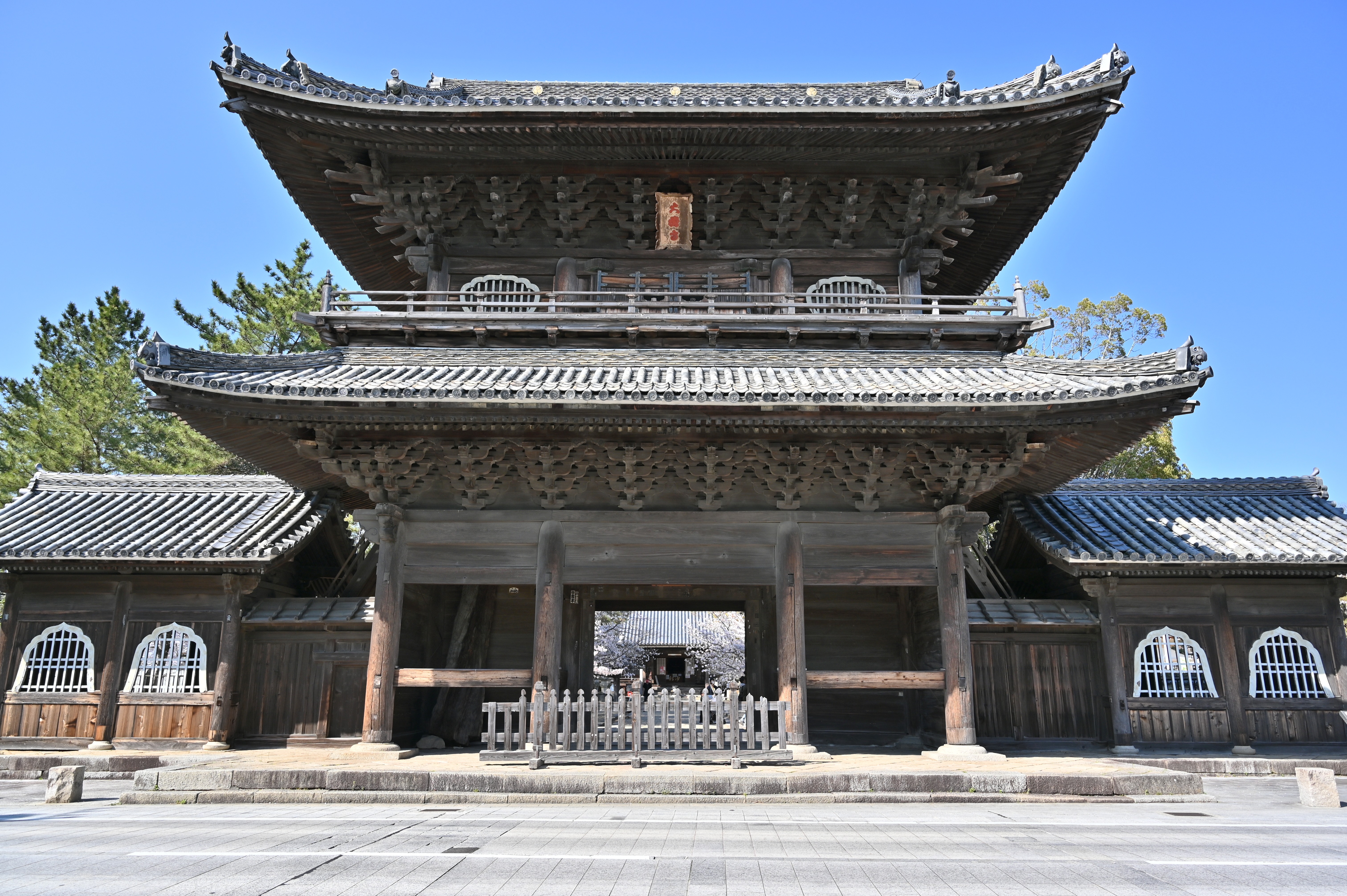
You do not need the full history to tell a shrine from a temple on the spot. A shrine’s entrance has a torii (a gate of two posts and a crossbeam marking the sacred grounds), and before praying you purify your hands and mouth at a chozuya (a small water pavilion). The Shinto way of praying is distinctive: two bows, two claps of the hands (kashiwade), and a final bow. A temple’s entrance has a sanmon (the main gate), and its grounds often hold Buddha statues, a large incense burner, and sometimes a cemetery. At a temple you do not clap; you simply press your hands together in silence. Knowing this one difference in gesture tells you at once which kind of sacred space you have entered. For a full tour of everything you pass inside a shrine, from the torii to the hidden main hall, see How to Read a Japanese Shrine.
In closing: how knowing the difference changes your visit
Shrines and temples are not divided simply by gate or Buddha statue. Shinto, honoring the local kami, and Buddhism, arriving from abroad, began from different origins. Yet the Japanese spent a thousand years fusing them together (shinbutsu shugo), pulled them apart again by government order in 1868 (shinbutsu bunri), and still today weave both into daily life through the pattern of shrines for joy, temples for farewell. Once you know this layered history, the next torii or sanmon you meet is no longer just a photo spot. It becomes a place where a thousand years of Japanese choices are written. In the next article, we will take the shinbutsu shugo we touched on here and dig into it through real shrines and temples you can visit.


コメントを残す