Visit a few temples in Japan and a quiet question starts to form: why are they all so different? One is a hall of gold and incense where monks chant to an image of Amida Buddha; another is a bare room where people sit facing a wall in silence; a third rings with the steady beat of a drum and the chant Namu Myoho Renge Kyo. They are all Buddhist, yet they feel like different religions.
They are not. They are different schools (in Japanese, shu) of the same faith — branches that grew apart over more than a thousand years as Buddhism was carried from India through China and remade, again and again, to fit Japan. Knowing a little about these schools turns a temple from a pretty building into a story you can read. This guide walks through the main ones you are likely to meet, who founded them, and what each is really about.
In this article
- Why Japan has so many Buddhist schools
- The schools of Nara: Buddhism as scholarship
- Heian esoteric Buddhism: Tendai and Shingon
- Kamakura Buddhism: a faith for everyone
- How to tell which school a temple belongs to
- Trivia: the mountain that gave birth to a revolution
- In closing
Why Japan has so many Buddhist schools
Buddhism reached Japan in the sixth century, traditionally dated to 552 or 538, arriving not as a single package but as a stream of texts, statues, and teachers coming by way of Korea and China. Each wave brought a different emphasis — some scholarly, some mystical, some devotional — and Japan kept them all rather than choosing one. Over the centuries these strands hardened into distinct schools, each with its own founder, its own core scripture, and its own idea of how an ordinary person might reach enlightenment.
A useful way to hold the whole picture is by era. The Nara period (710–794) produced scholarly schools run by and for monks. The Heian period (794–1185) added two great esoteric schools, Tendai and Shingon, centred on secret ritual. And the turbulent Kamakura period (1185–1333) gave birth to the popular schools — Pure Land, Zen, and Nichiren — that opened the path to farmers, warriors, and women, and that most Japanese belong to today. The story is really one long movement from Buddhism as a specialist discipline toward Buddhism as something anyone can practise.
The schools of Nara: Buddhism as scholarship
When Japan’s first permanent capital stood at Nara, Buddhism was largely a project of the state. Six academic traditions, known together as the Nanto Rokushu (the “Six Schools of the Southern Capital”), were studied side by side in the great temples: Kegon, Hosso, Sanron, Ritsu, Jojitsu, and Kusha. These were less like rival churches and more like university faculties — fields of doctrine a single monk might study in turn, rather than congregations a layperson would join.
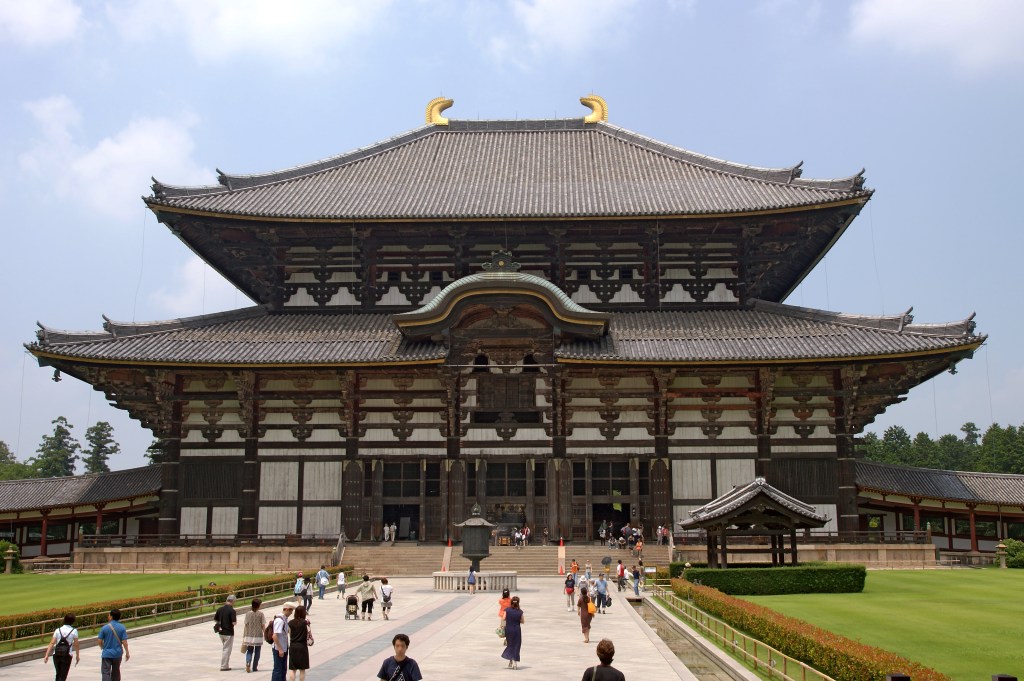
Their concern was philosophy: the nature of reality, the workings of karma, the fine points of monastic discipline (that last being the specialty of the Ritsu school). The most visible survivor is Kegon, whose head temple is Todai-ji in Nara — home of the colossal bronze Great Buddha. Ordinary people of the time rarely “practised” this Buddhism in any personal way; they benefited from it at a distance, through rituals the monks performed for the protection of the nation. That gap between the monastery and the people is exactly what the later schools would set out to close.
Heian esoteric Buddhism: Tendai and Shingon
In the early ninth century two monks travelled to Tang China and came back with something new: mikkyo, or esoteric Buddhism — a Buddhism of secret rituals, sacred hand gestures (mudra), chanted formulas (mantra), and cosmic diagrams (mandala) said to transmit truths too deep for ordinary words. Their two schools would dominate the Heian court and shape everything that came after.
Tendai — the school on the mountain
Saicho (767–822), honoured after death as Dengyo Daishi, founded the Tendai school on Mount Hiei, the peak that rises northeast of Kyoto, where his monastery grew into the vast temple complex of Enryaku-ji. Tendai took its name and framework from the Chinese Tiantai tradition and placed the Lotus Sutra at the centre of everything, teaching that all beings can ultimately attain buddhahood. The school won imperial recognition in 806; the independent ordination platform Saicho fought for his whole life was granted only days after he died.
Tendai’s real importance is what it produced. Its broad, all-embracing curriculum on Mount Hiei became the training ground for nearly every founder of the schools that followed. Honen, Shinran, Eisai, Dogen, and Nichiren all studied there before breaking away — which is why the mountain is sometimes called the mother of Japanese Buddhism.
Shingon — the school of secret ritual
Kukai (774–835), known to history as Kobo Daishi, founded the Shingon (“True Word”) school after studying esoteric Buddhism in the Tang capital of Chang’an. In 816 the court granted him Mount Koya in Wakayama, and there he built the mountaintop monastic centre that Shingon still calls home. Where Tendai was broad, Shingon was intensely focused on esoteric practice: through the right ritual, mudra, and mantra, Kukai taught, a practitioner could realise buddhahood in this very body, without waiting lifetimes.
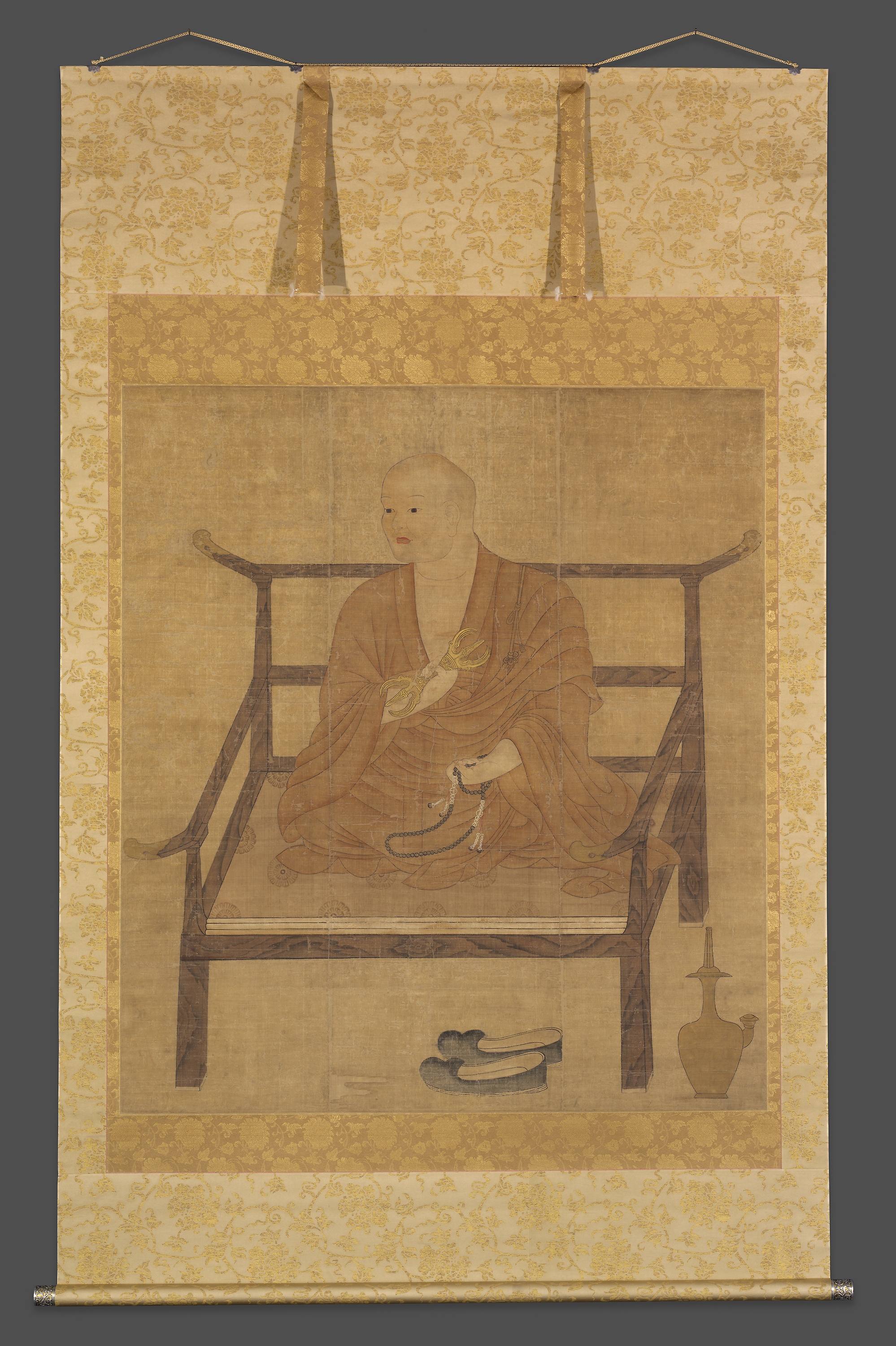
Kukai is one of the most beloved figures in all of Japanese religion, remembered as a calligrapher, engineer, and saint. Shingon believers hold that he did not die in 835 but entered eternal meditation at Koya, waiting for the future Buddha — a belief we explore in our full guide to Koyasan (linked below).
Kamakura Buddhism: a faith for everyone
By the late twelfth century Japan was sliding into war, famine, and the rise of the samurai. Many believed the world had entered mappo, a degenerate final age in which the old, demanding practices no longer worked. Out of that anxiety came a wave of reformers — nearly all trained on Mount Hiei — who each distilled Buddhism down to a single, simple practice ordinary people could actually do. This is the Buddhism most Japanese belong to today.
Pure Land: Honen and the nembutsu
Honen (1133–1212) left Mount Hiei in 1175 convinced that salvation could not depend on scholarship or hard meditation, which were beyond most people. He taught a single practice: the nembutsu, reciting Namu Amida Butsu (“I take refuge in Amida Buddha”). Sincere recitation, he held, secured rebirth in the Pure Land, the paradise of Amida Buddha, from which enlightenment was then assured. His school became Jodo-shu (the “Pure Land school”), and for the first time farmers and fishermen were told the path was fully open to them.
True Pure Land: Shinran and pure faith
Shinran (1173–1263), Honen’s devoted disciple, pushed his teacher’s logic to its conclusion. If Amida’s compassion does the saving, he reasoned, then even the recitation is a gift of that compassion rather than a human achievement — what matters is tariki, “other-power,” pure trust in Amida’s vow. Shinran also broke with monastic tradition by openly marrying and eating meat, calling himself “neither monk nor layman.” His Jodo Shinshu (“True Pure Land school”) went on to become the single largest Buddhist denomination in Japan, its head temples the twin Hongan-ji in Kyoto.
Zen: Rinzai and Soto
At the same time, two monks brought Zen from China — the tradition (Chan in Chinese) that seeks awakening not through scripture or ritual but through direct experience in seated meditation. Eisai (1141–1215) returned from China in 1191 with the Rinzai school and founded Kennin-ji in Kyoto in 1202; Rinzai is known for the koan, a baffling riddle (such as the sound of one hand) used to jolt the mind past ordinary logic. Its bracing discipline appealed strongly to the samurai class. Eisai also carried tea seeds home and wrote Japan’s first book on tea, quietly seeding a whole culture.
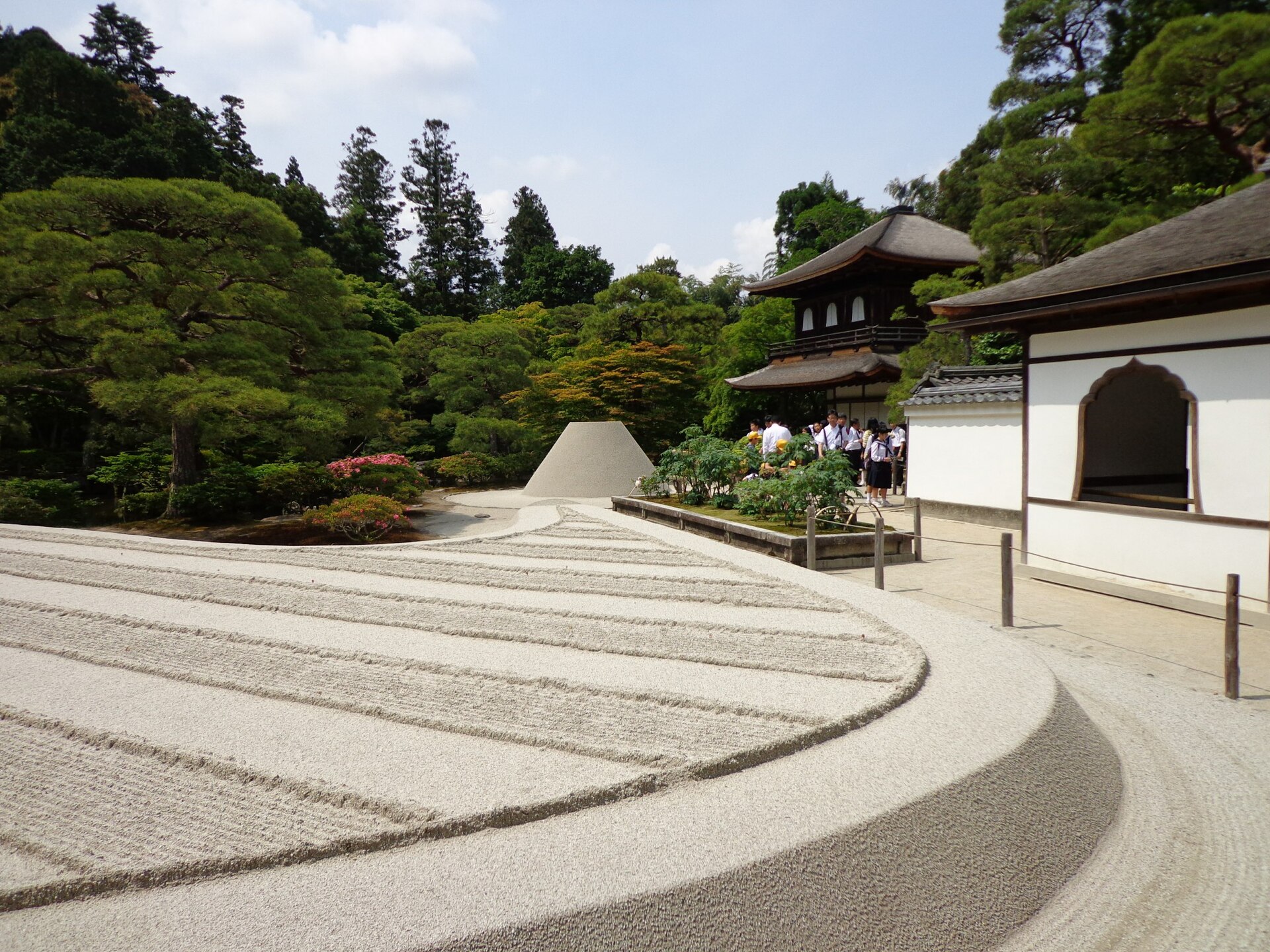
Dogen (1200–1253) returned from China in 1227 and founded the Soto school, retreating to found Eihei-ji deep in the mountains of Echizen. Soto centres on shikantaza, “just sitting” — zazen practised not as a means to some goal but as the expression of enlightenment itself. Rinzai and Soto remain the two great Zen schools, and Zen’s spare aesthetic shaped the rock garden, the tea room, and the ideal of wabi-sabi.
Nichiren: the Lotus Sutra and the drum
Nichiren (1222–1282) took yet another path. On the 28th day of the fourth month of 1253, at the temple of Seicho-ji on Mount Kiyosumi, he first proclaimed the daimoku: Namu Myoho Renge Kyo, “Devotion to the Lotus Sutra.” He taught that this single chant contained the entire truth of the Lotus Sutra, and therefore the whole of Buddhism, and that no other practice was needed — or, more controversially, valid. Fierce and uncompromising, Nichiren was exiled twice for his attacks on other schools. His tradition survives today in numerous branches and lay movements, and its rhythmic chanting is among the most recognisable sounds in Japanese Buddhism.
How to tell which school a temple belongs to
You do not need to be a scholar to place a temple. A few clues do most of the work. Look first at the main image (honzon) in the central hall: a serene Amida Buddha, often with hands in a welcoming gesture, points to Pure Land or True Pure Land; a fierce, many-armed esoteric figure suggests Shingon or Tendai. A meditation hall with rows of cushions facing the wall, and often a spare rock or moss garden, marks a Zen temple. A hall centred on the Lotus Sutra, with energetic group chanting, points to Nichiren.
The simplest clue of all is to ask, or to read the temple’s own leaflet, which almost always names its school. Some famous temples make it easy: Todai-ji in Nara is Kegon; the mountaintop temples of Koyasan are Shingon; Kyoto’s Silver and Golden Pavilions are Rinzai Zen; Eihei-ji is Soto; Chion-in is the head of Jodo-shu. Once you start noticing, the label reframes everything you see — the images, the layout, even the sound of the place.
Trivia: the mountain that gave birth to a revolution
Here is a fact that surprises many visitors. The founders of the great Kamakura schools — Honen of Pure Land, Shinran of True Pure Land, Eisai of Rinzai Zen, Dogen of Soto Zen, and Nichiren — did not appear from five different corners of the country. Nearly all of them first trained as monks in the same place: the Tendai monastery on Mount Hiei. Each studied the broad Tendai curriculum, grew dissatisfied, and came down the mountain to found something new. The single institution that most shaped Japanese Buddhism, in other words, is the one whose students kept leaving it.
In closing
The schools of Japanese Buddhism are not a set of competing brands to be ranked, but a thousand-year conversation about the same question: how can a human being wake up? Nara answered with study, Heian with sacred ritual, Kamakura with faith, meditation, and chant. When you stand in a temple hall and understand which answer is being offered there, you are no longer just a sightseer — you are reading the building. That, more than any single monument, is what these places have to teach.
Related reading
- What Is a Kami? Japan’s Gods and Sacred Spirits of Shinto — the Shinto companion to this guide.
- Shinbutsu-Shugo: When Japan’s Gods and Buddhas Were One — how Buddhism and the native gods intertwined.
- Koyasan: Mount Koya and the Saint Who Never Died — Shingon Buddhism and its founder Kukai, up close.


_-_1960.40_-_Art_Institute_of_Chicago.jpg)
.jpg)
コメントを残す