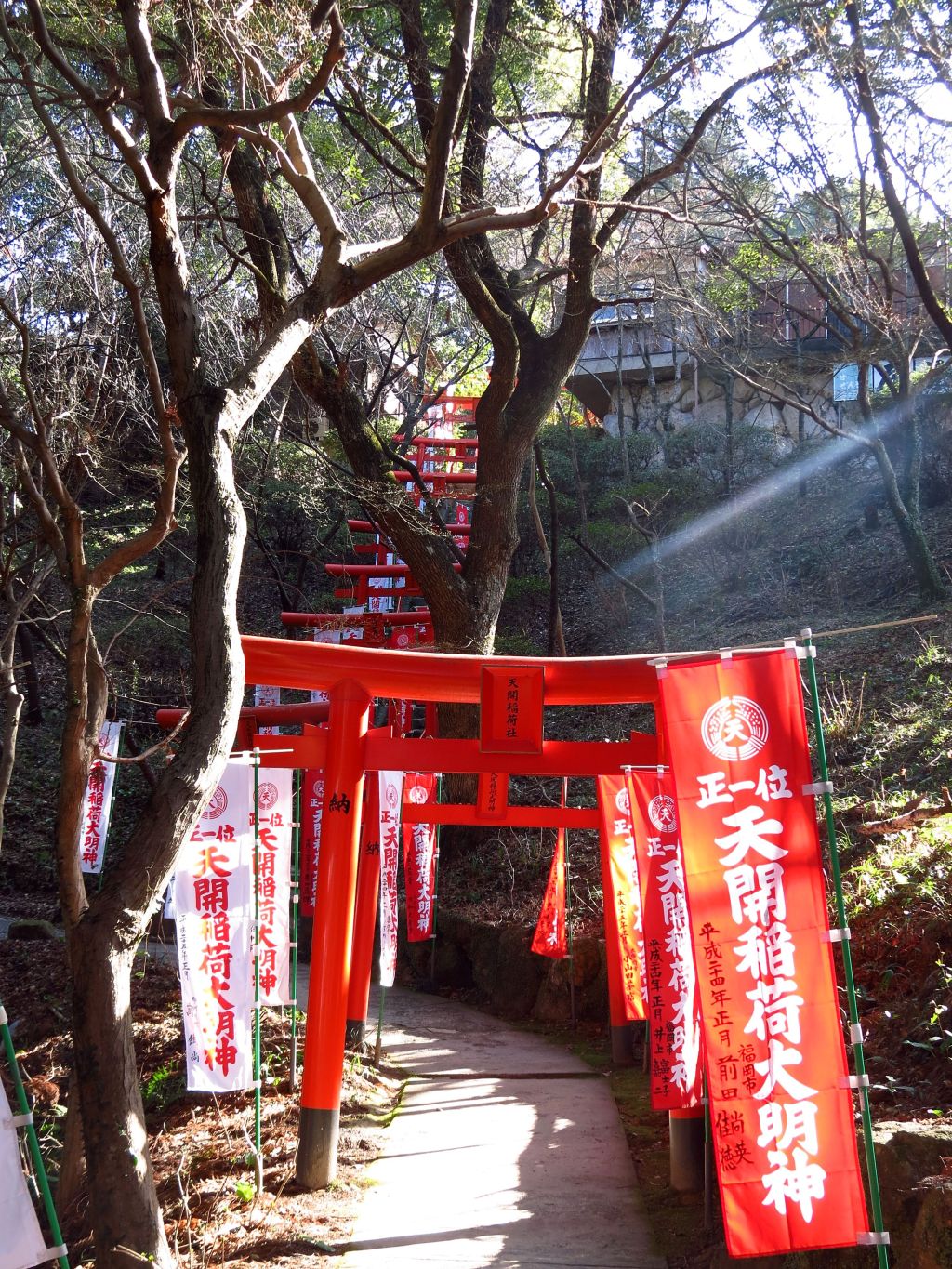
Every winter, tens of thousands of teenagers file through the vermilion gates of a shrine in northern Kyushu, buy a small wooden plaque, write a wish on it, and hang it beside thousands of others. Almost all the wishes ask for the same thing: to pass an exam. The god they are petitioning was once a living man — a brilliant scholar who died disgraced and far from home, and whose furious ghost was blamed for killing his enemies and setting the imperial palace ablaze. This is the strange, two-sided story of Dazaifu Tenmangu and the man who became Tenjin, the god of learning.
In this article
- A shrine built over a grave
- The man behind the god: Sugawara no Michizane
- From vengeful spirit to Tenjin
- Reading the grounds: oxen, bridges, and plum trees
- Why students come: Tenjin today
- Practical information
- In closing
A shrine built over a grave
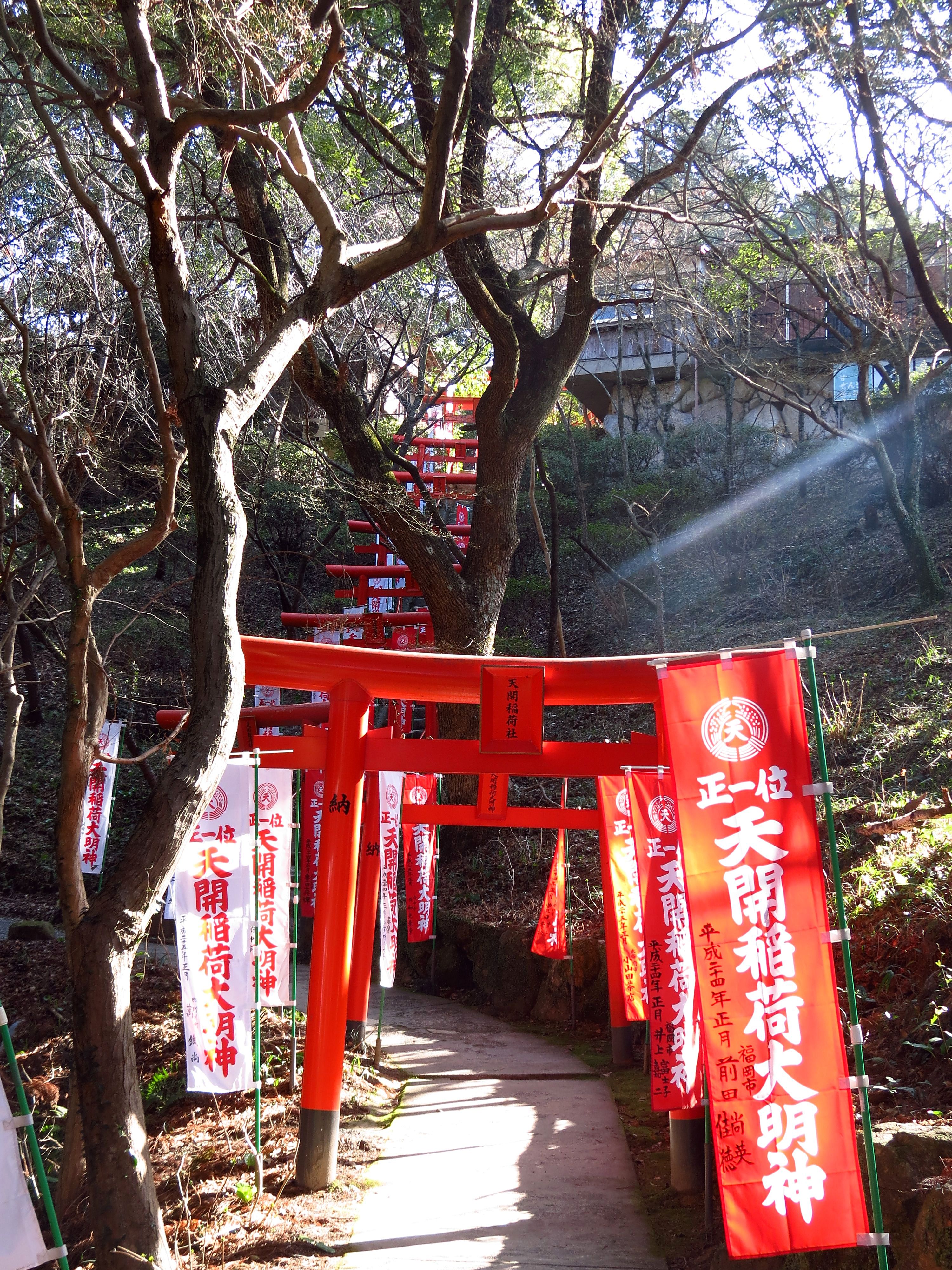
Dazaifu Tenmangu sits just outside Fukuoka, in a town whose name — Dazaifu — belonged to the government headquarters that once administered all of Kyushu and handled Japan’s diplomacy with the Asian mainland. It is not one shrine among many. Together with Kitano Tenmangu in Kyoto, it is one of the two head shrines of a nationwide network of more than ten thousand Tenmangu and Tenjin shrines, all dedicated to a single deified human being.
What makes Dazaifu the emotional center of that network is a simple fact of geography: the shrine stands directly over the grave of the man it worships. He died here, in exile, in the year 903. Everything else — the myth of the flying plum tree, the bronze oxen, the arched bridges, the millions of exam-season prayers — grew outward from that single burial mound. To understand why, you have to start with his life.
The man behind the god: Sugawara no Michizane
Sugawara no Michizane (845–903) was born into a family of scholars during the Heian period, when the imperial court in Kyoto prized skill in Chinese poetry and classical learning almost as highly as noble birth. He was a prodigy — composing Chinese verse as a boy — and he rose through the bureaucracy on the strength of his mind, passing the demanding civil-service examination in 870 and later serving as governor of Sanuki Province. In 894 he was appointed to lead an official embassy to Tang China, but he advised the court to suspend these missions, and the centuries-old program of state envoys to the continent came to an end.
Emperor Uda favored Michizane as a counterweight to the powerful Fujiwara clan, who for generations had dominated the court by marrying their daughters to emperors and ruling as regents. Under Uda’s successor, Emperor Daigo, Michizane reached the second-highest office in the land: in 899 he was made Minister of the Right (udaijin). Standing opposite him as Minister of the Left was Fujiwara no Tokihira — younger, aristocratic, and unwilling to share power with a scholar of middling birth.
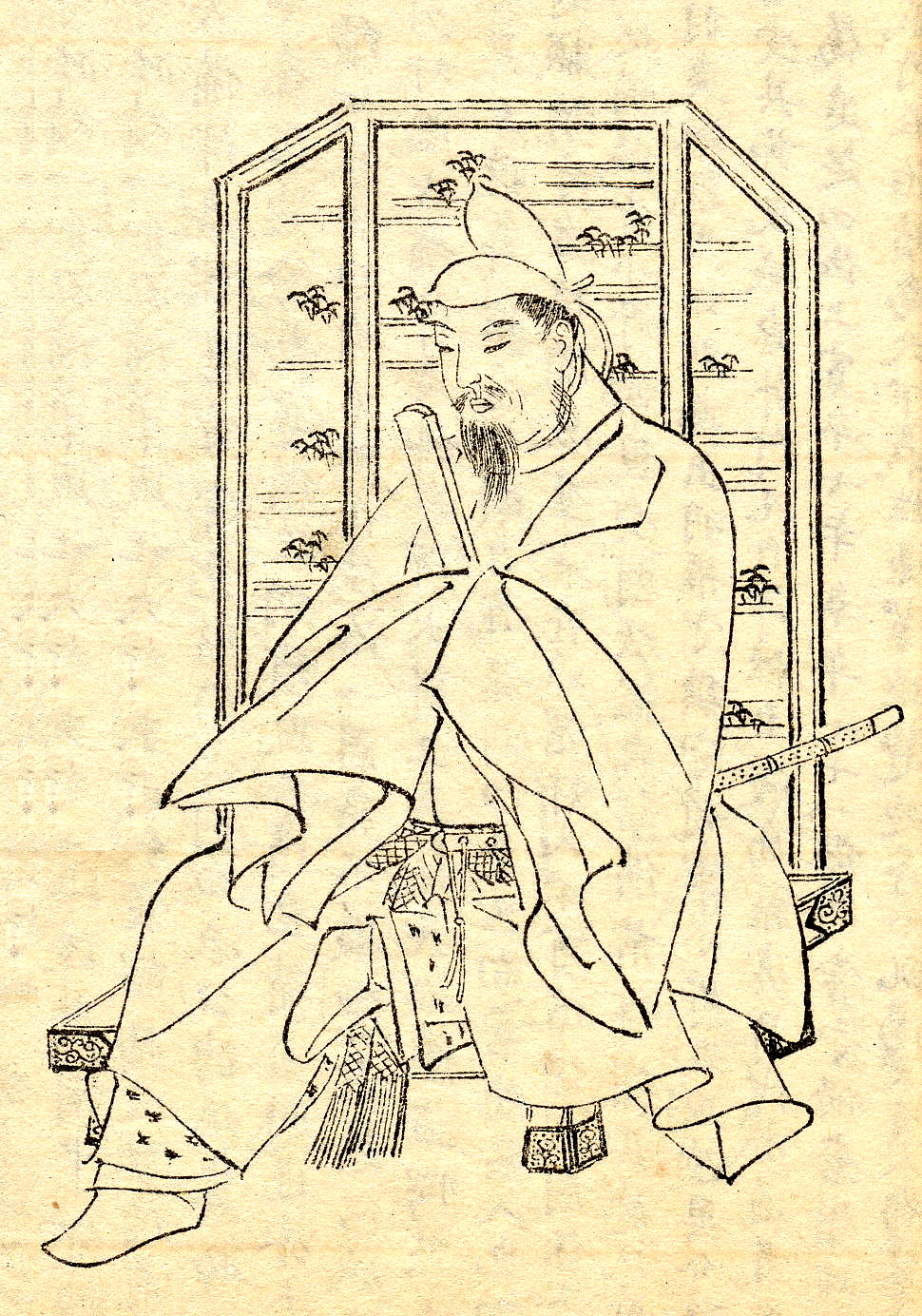
In 901 the rivalry ended in ruin. Tokihira persuaded Emperor Daigo that Michizane was plotting treason — scheming, it was said, to depose the emperor in favor of another prince. Without trial, Michizane was stripped of his rank and banished to Dazaifu in distant Kyushu, given a hollow, nominal title and left with almost no income. He never saw the capital again. Sick, impoverished, and grieving for the family scattered by his fall, he died in Dazaifu in 903, at the age of fifty-eight.
One of the most famous poems in the Japanese language dates from these final years. Leaving his beloved plum tree in the capital, Michizane is said to have written:
When the east wind blows,
send me your fragrance, plum blossoms —
though your master is gone,
do not forget the spring.
Legend adds a miraculous coda: the plum tree loved him so much that it uprooted itself and flew across the sea to Kyushu to be near him. That “flying plum,” the tobiume, is said to be the ancient tree that still stands to the right of the main hall today — traditionally the first in the grounds to bloom each year.
From vengeful spirit to Tenjin
Here the story takes its darkest and most important turn — the part that explains why a shrine exists at all. When Michizane was buried, tradition says the ox pulling his funeral cart stopped and refused to move. This was read as the dead man’s own will, so he was buried on that spot, and a temple was raised over the grave. It might have ended there, a sad footnote about court intrigue. Instead, Kyoto began to fall apart.
In the years after Michizane’s death, a chain of disasters struck the capital and, pointedly, the people who had destroyed him. Fujiwara no Tokihira died young. Sons of Emperor Daigo, including crown princes, died in succession. Plague and drought spread. Then, on a summer day in 930, lightning struck the Seiryoden — a hall of the Imperial Palace itself — killing several high courtiers as the emperor looked on. Daigo fell ill and died within months. To a Heian court steeped in the belief that a wronged soul could return as an onryo (a vengeful spirit), the pattern was unmistakable. The scholar they had exiled was taking his revenge from beyond the grave.
This belief that the angry dead must be appeased has a name — goryo shinko, the cult of vengeful spirits — and Michizane became its most famous case. The court’s response was not to fight the ghost but to placate it. His exile edict was burned, his rank and office were restored, and he was raised, step by step, to the highest honors: by 993 he had been posthumously elevated to Senior First Rank, the summit of the court hierarchy he had been cast out of. Above all, he was enshrined as a god.
The name he was given, Tenjin (literally “heavenly deity”), was not new. It had belonged to older sky-and-thunder gods, and by merging the lightning-wielding spirit of Michizane with that thunder deity, the court produced a figure grand enough to fear and worship. His full divine title became Tenman Daijizai Tenjin. A shrine was founded for him at Kitano in Kyoto around 947, and here at Dazaifu his grave became a sacred center. In the centuries that followed, as Shinto gods and Buddhist figures were widely understood to be two faces of one reality — the logic of shinbutsu-shugo, the fusion of the two religions — monks assigned Tenjin a Buddhist “original form” (honji), most often the eleven-headed Kannon, the bodhisattva of compassion.
Michizane’s transformation is one of the clearest examples in Japan of a real person becoming a kami. And it is a strange one to keep in mind as you watch cheerful students praying for good grades: the benevolent god of study they address was, for the courtiers of the tenth century, an object of genuine terror.
Reading the grounds: oxen, bridges, and plum trees
Dazaifu Tenmangu rewards visitors who know what they are looking at, because nearly every feature encodes a piece of the story above.
The reclining oxen
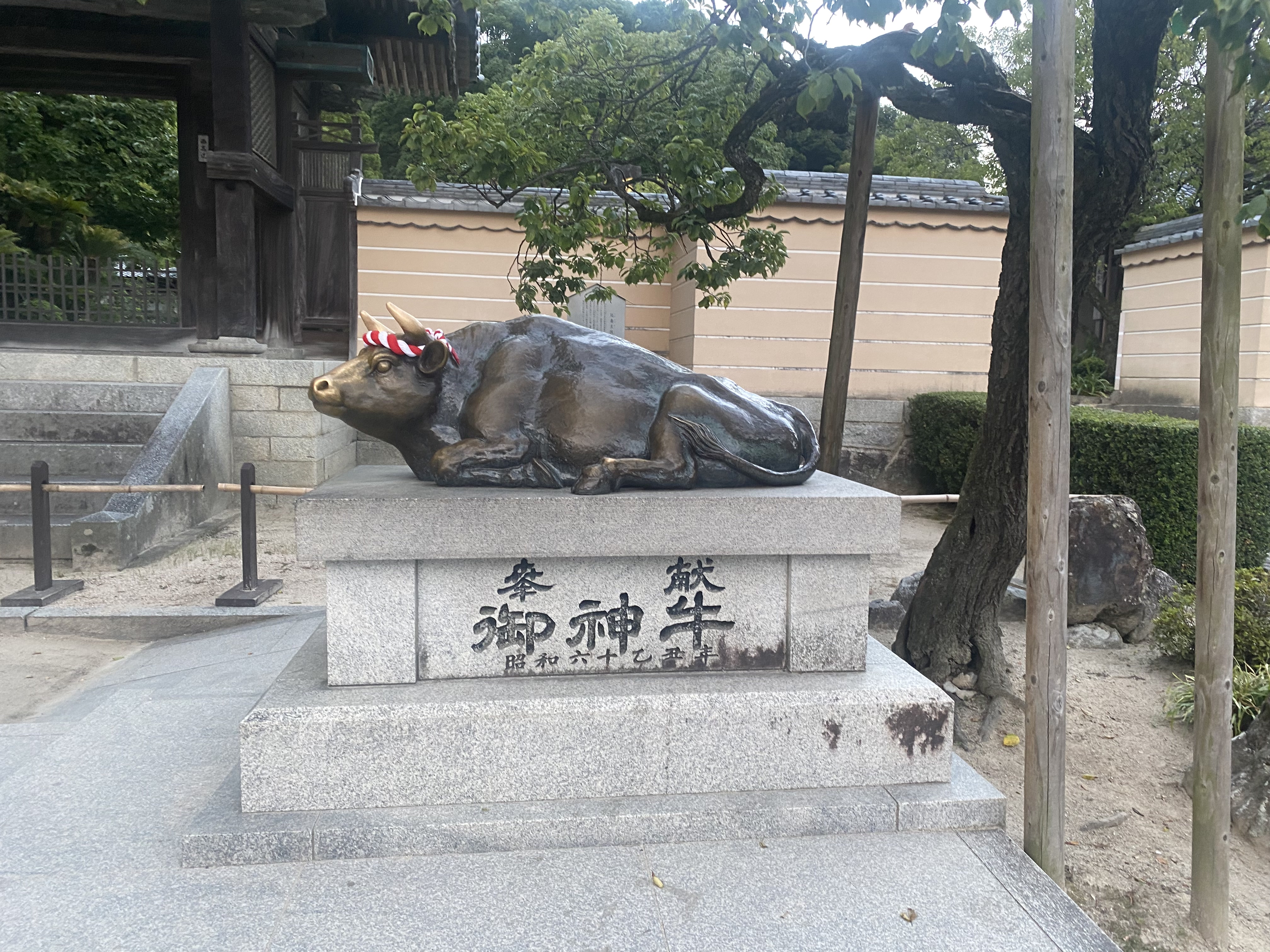
Scattered across the grounds are bronze statues of oxen lying down — never standing. They recall the funeral ox that halted and chose Michizane’s burial place, and the ox has become Tenjin’s sacred messenger. These are nade-ushi, “stroking oxen”: visitors rub the head of the ox to receive wisdom, and rub the part of the body matching their own ailment in hopes of healing. Generations of hands have polished the bronze foreheads to a bright shine.
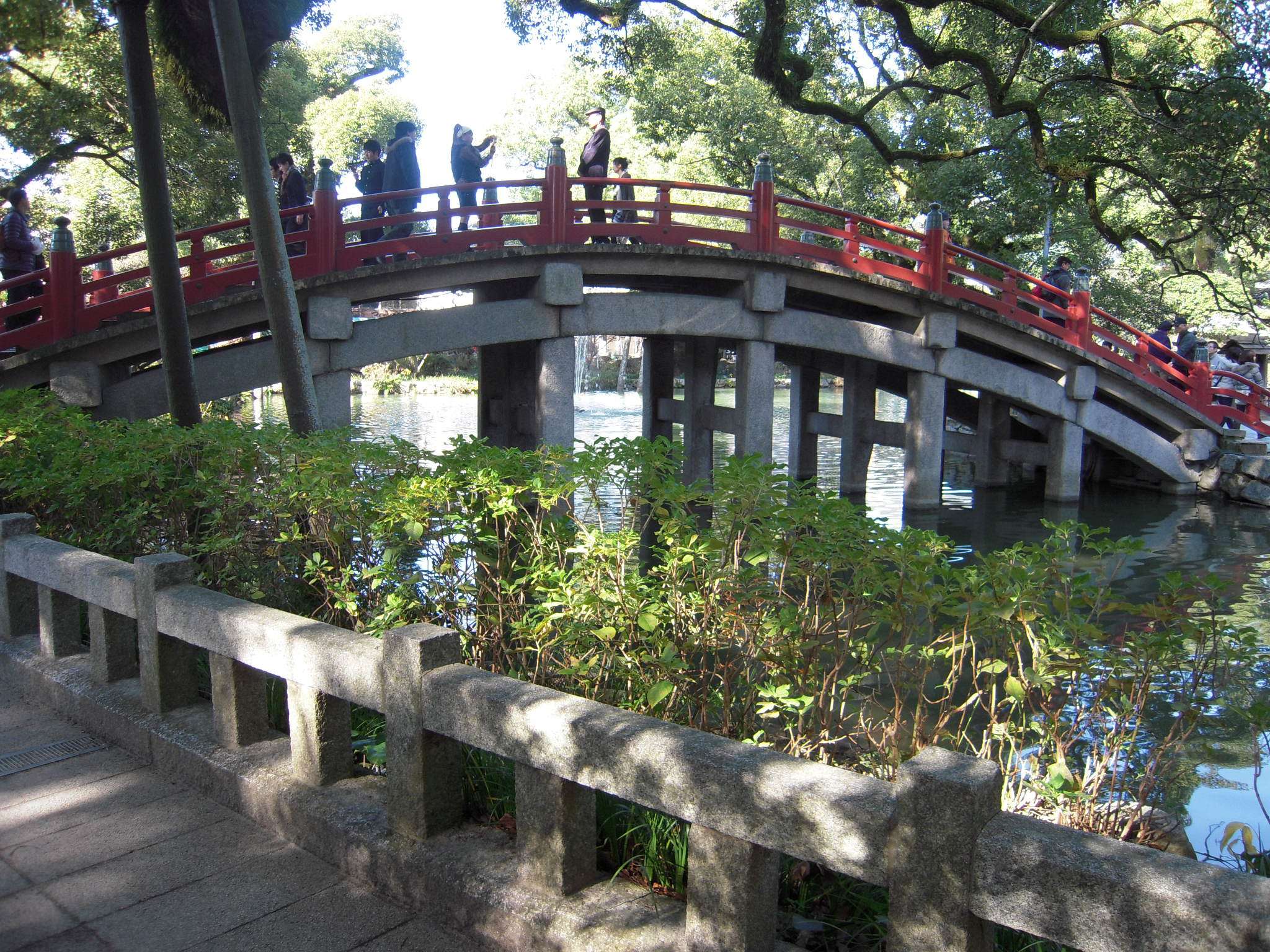
The three bridges over the heart-shaped pond
On the approach to the shrine you cross a pond shaped like the character for “heart” (shinji-ike), spanned by a sequence of three bridges — two steeply arched, one flat between them. They are said to represent the past, the present, and the future. Crossing them is a small act of purification: you leave your past behind on the first bridge, stand in the present on the second, and step toward the future on the third, arriving cleansed before the god.
The main hall and the six thousand plums
The main hall (honden) that stands over the grave dates in its current form to 1591 and is a designated Important Cultural Property; a major renovation of its roof was completed in 2026. Around it grow roughly six thousand plum trees of some two hundred varieties — the plum being Michizane’s emblem, the flower of his farewell poem and his flying tree. They bloom from late February into March, filling the grounds with scent at exactly the season when students are sitting their entrance examinations. The pairing of blossom and prayer is not a coincidence; it is the whole meaning of the place, compressed into a single fragrant month.
Why students come: Tenjin today
How did a terrifying storm god become the friendly patron of schoolchildren? The bridge between the two was Michizane’s own life. Whatever else he was, he had been the most celebrated scholar of his age, and once his vengeful phase had been safely worshipped into calm, it was his brilliance that endured. By the Edo period (1603–1868), when temple schools spread literacy across Japan, Tenjin had become above all the god of scholarship, literature, and calligraphy.
That is the Tenjin most visitors meet today. Students come to buy omamori (protective amulets) for academic success and to write their wishes on ema, the small wooden votive plaques that hang in dense wooden thickets near the hall. The shrine is busiest in the run-up to exam season in winter and early spring. It is worth pausing at the ema racks to read a few — in several languages now — because they are a genuine, unguarded record of what people hope for, addressed to a man who died more than eleven centuries ago.
The shrine’s ritual calendar keeps the older, stranger Tenjin alive too. On the night of January 7 comes the uso-kae or “bullfinch exchange”: worshippers swap small carved wooden bullfinches in the dark, a rite said to turn the past year’s lies (uso) into truth, since the bird’s name puns on the word for a lie. The same night hosts oni-sube, a boisterous fire-and-smoke ritual to drive off demons — a reminder that this is, at root, a shrine founded to manage dangerous supernatural power.
Practical information
Dazaifu Tenmangu is an easy day trip from Fukuoka. Take the Nishitetsu line toward Dazaifu (usually changing at Nishitetsu-Futsukaichi); the shrine is about a five-minute walk east of Dazaifu Station, along a lively approach lined with shops selling umegae-mochi — grilled rice cakes stamped with a plum crest and filled with sweet red bean, a local specialty tied to the Michizane legend. The grounds are free to enter and open daily. Behind the shrine, a covered escalator leads to the Kyushu National Museum, and a short walk away is Komyozenji, a small Zen temple with quiet moss-and-stone gardens that make a peaceful counterpoint to the crowds. Plum season (late February to mid-March) is the most beautiful and the most crowded time to visit.
In closing
It is easy to visit Dazaifu Tenmangu as a pretty photo stop — the red hall, the arched bridges, the plum blossoms — and miss what it actually commemorates. This is a monument to a political murder by exile, built by the very court that committed it, out of fear of the dead man’s rage. That the same shrine now radiates warmth and hope, thronged by students trusting a former ghost to help them into university, says something profound about how Japan has always handled its gods: not by banishing what is frightening, but by honoring it until it turns kind. Michizane was wronged, deified out of terror, and finally loved. Standing among the plum trees over his grave, you are looking at the full arc of that transformation.
Trivia: the plum that flew
The tobiume or “flying plum” legend — a tree so devoted it launched itself across the sea — is the most famous, but folklore also tells of a pine that tried to follow Michizane and a cherry that died of grief at his exile. Of the three, only the loyal plum is said to have completed the journey. It is a small, telling detail of Tenjin worship: among all flowers, the plum, which blooms bravely in the last cold of winter before any other, belongs to the scholar-god.
Related reading
- What Is a Kami? Japan’s Gods and Sacred Spirits of Shinto — how real people like Michizane come to be worshipped as gods.
- Shinbutsu-Shugo: When Japan’s Gods and Buddhas Were One — the fusion of Shinto and Buddhism that gave Tenjin a Buddhist “original form.”
- Kasuga Taisha: Nara’s Shrine of Sacred Deer and 3,000 Lanterns — the tutelary shrine of the Fujiwara clan, whose rivalry sealed Michizane’s fate.


.jpg)


コメントを残す