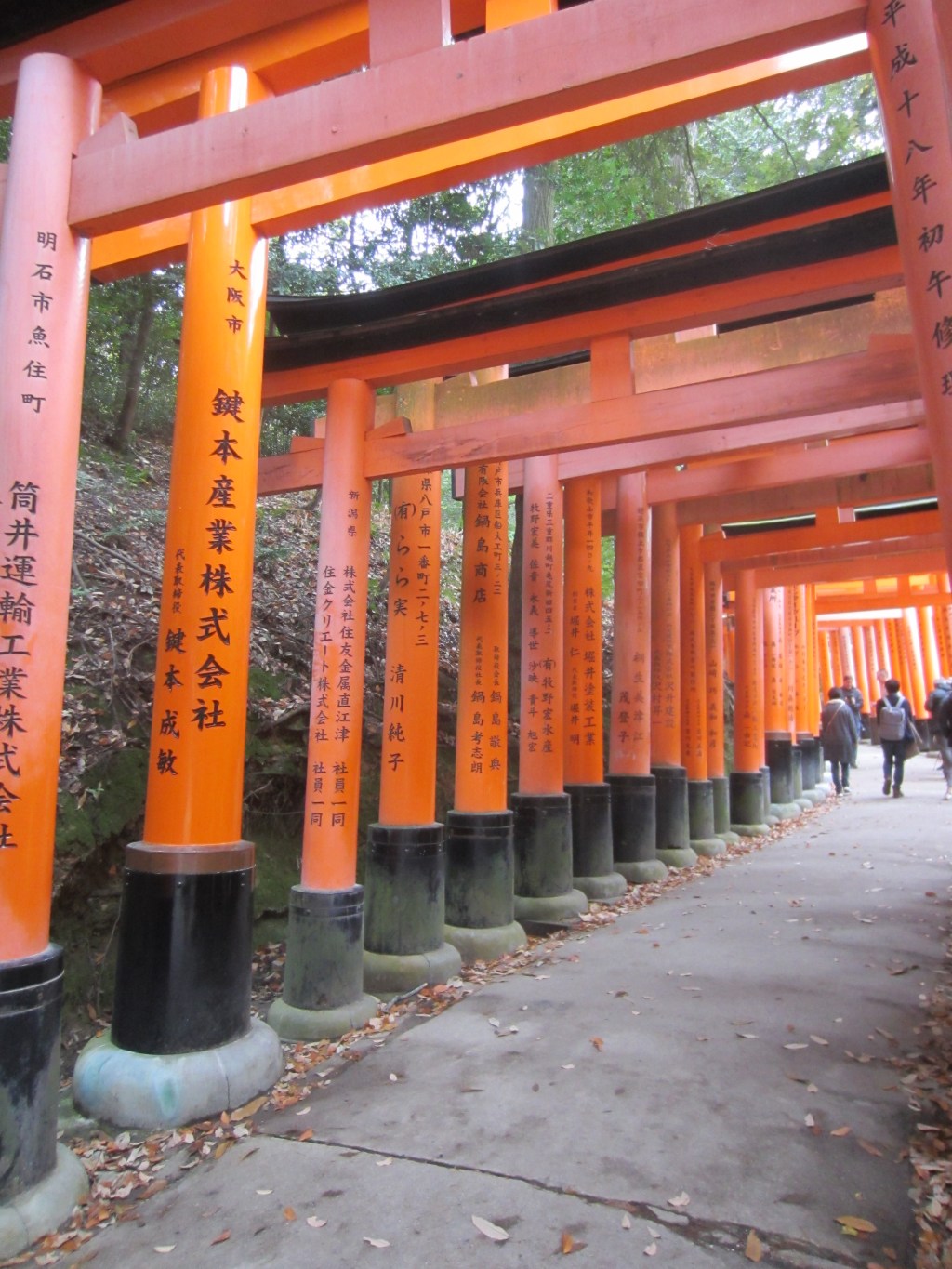
Row upon row of vermilion gates, forming tunnels that wind up into the mountain — you may have seen the photo before. This is Fushimi Inari Taisha in Kyoto, the head shrine of some 30,000 Inari shrines across Japan. Entry is free and the grounds are open 24 hours, so arrive at dawn and you can have the tunnels of gates almost to yourself. This guide covers what the thousand torii really mean, who the foxes scattered across the mountain are, and the gate-town food to try afterward — everything that makes Fushimi Inari far more fascinating.
In this article
- Overview: head shrine of 30,000 Inari shrines
- Highlights and must-see points
- The deity: Inari and prayers for prosperity
- The foxes: messengers of the kami
- History: the Hata clan and 1,300 years of faith
- Climbing Mount Inari
- Gate-town food: quail and inari-zushi
- Practical visitor information
- In closing
Overview: head shrine of 30,000 Inari shrines
Fushimi Inari Taisha spreads across the foot of Mount Inari in southern Kyoto. It is the head shrine of roughly 30,000 Inari shrines nationwide — the affectionately named Oinari-san found all over Japan — which makes it the very center of Inari worship.
The grounds include the whole of Mount Inari, all the way to the summit, and they are surprisingly vast. Many visitors see only the main hall at the base and leave, but the real magic is the corridor of vermilion gates that covers the mountain, and the foxes that watch over it everywhere you look.
Highlights and must-see points
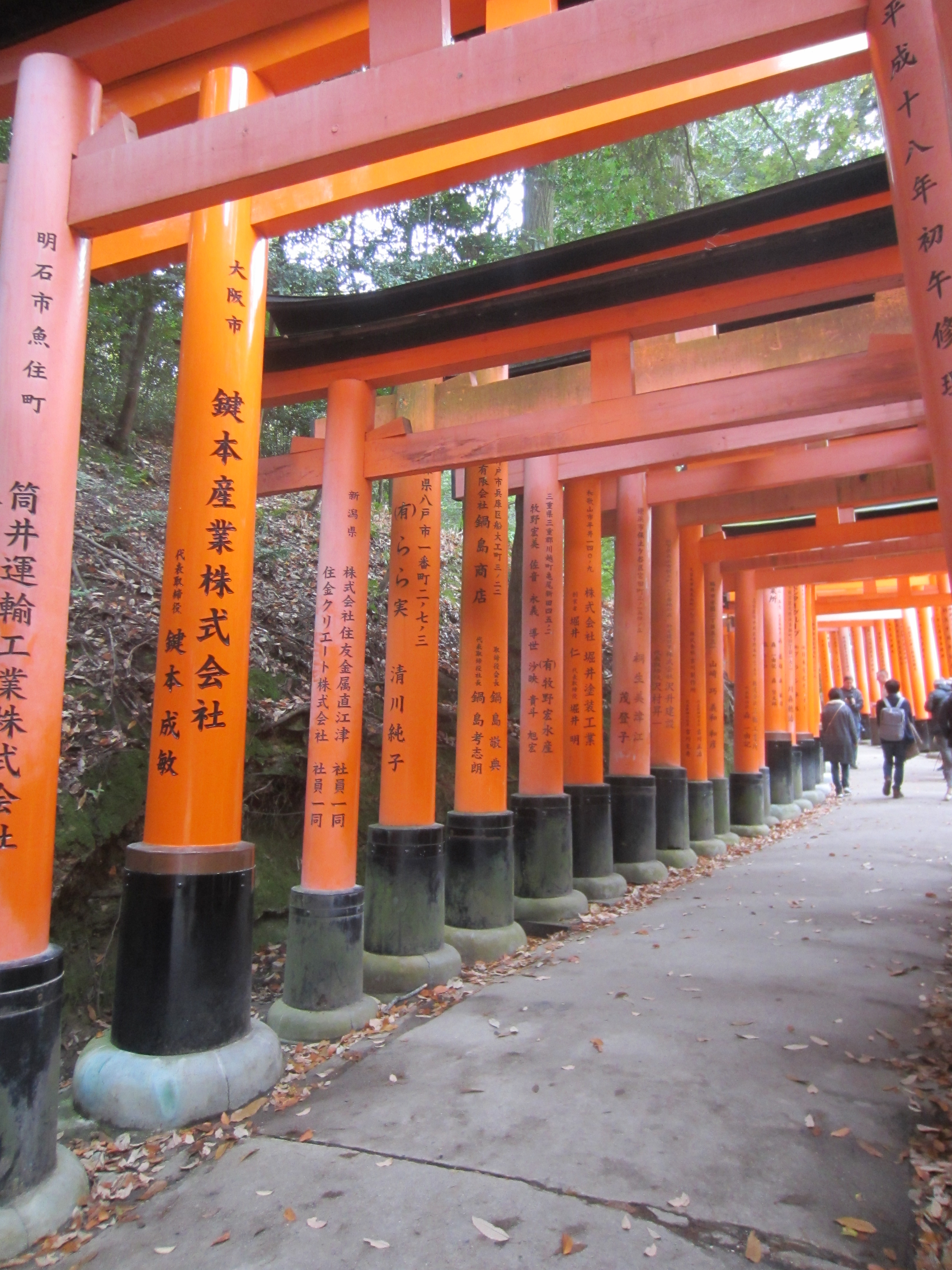
The one thing you cannot miss is the Senbon Torii (“thousand torii gates”). Beyond the main hall, vermilion gates stand packed so closely they form a tunnel. “Senbon” is really just a way of saying “many” — in fact about 10,000 gates stand across the whole mountain. Each was donated by a person or a company, often in thanks for a wish granted; the donor’s name and date are inked on the back, so peek as you pass through.
The other star is the fox (kitsune) statues. All around the grounds, foxes with a key, a jewel, or a sheaf of rice in their mouths watch over visitors. Who these foxes are is explained below. Don’t miss the Omokaru-ishi (“heavy-or-light stone”) at the rear shrine, either: make a wish and lift the stone lantern’s top — if it feels lighter than expected, your wish will come true.
The deity: Inari and prayers for prosperity
The shrine enshrines Inari Okami. Originally a deity of rice and the harvest, Inari came over time to be worshipped as a god of business success and industry as well. The countless gates donated by companies and shops are exactly that — a prayer that “business may go well.” For anyone hoping for success in work, Fushimi Inari is a special place.
The foxes: messengers of the kami
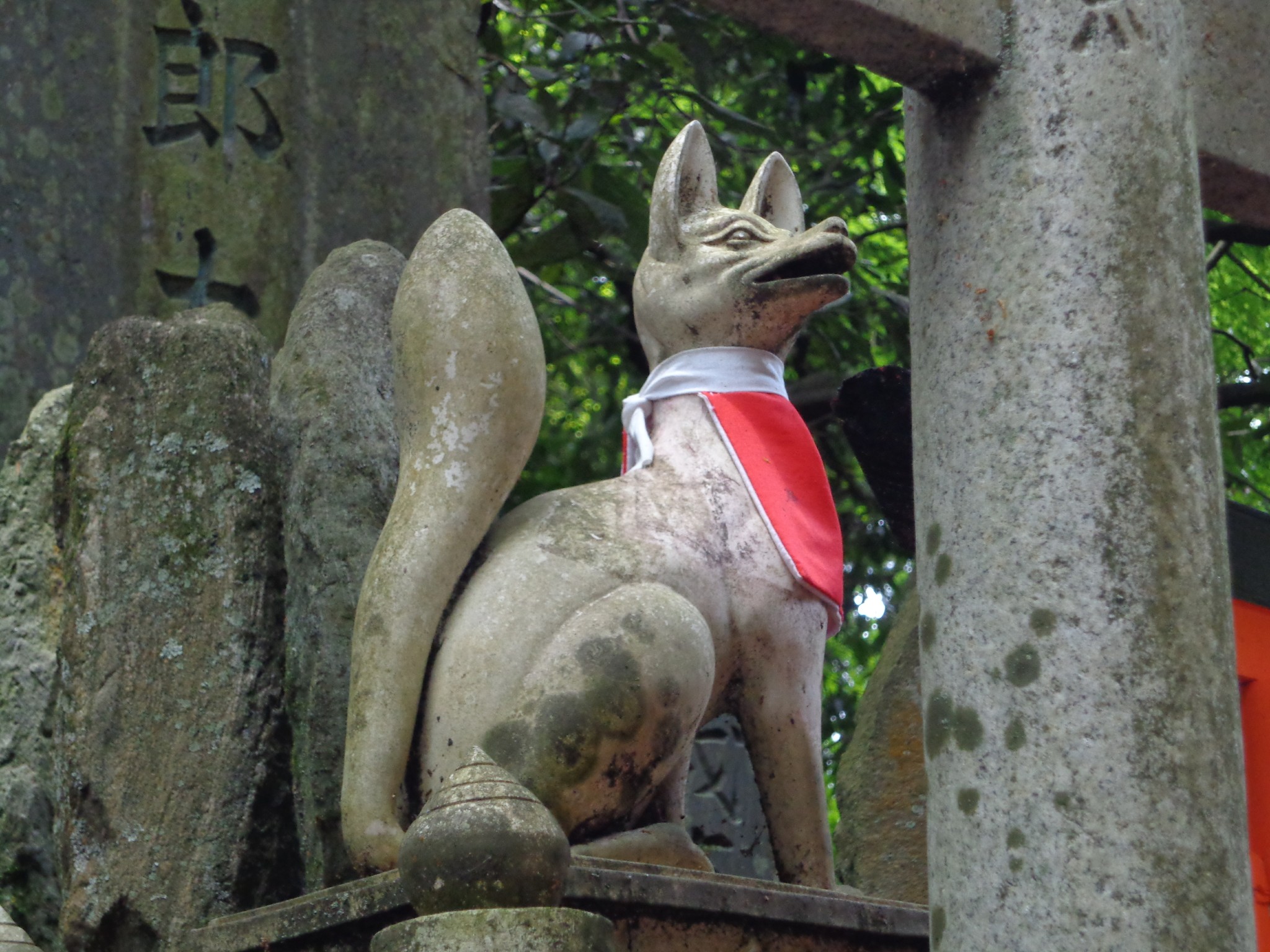
The image of “Inari equals fox” is strong, but the fox is not the deity itself. The fox is Inari’s messenger (shinshi) — the one who carries the god’s will. So the foxes on the grounds are the link between visitor and kami. What they hold has meaning, too: a key to the rice granary, a jewel that grants wishes, a scroll of wisdom, a sheaf of rice for the harvest. Watch their mouths as you walk, and exploring the grounds becomes far more fun.
History: the Hata clan and 1,300 years of faith
Fushimi Inari is said to have begun in 711, in the Nara period, when the Hata clan — an immigrant family that governed this area — enshrined the deity on Mount Inari. It has carried more than 1,300 years of history since.
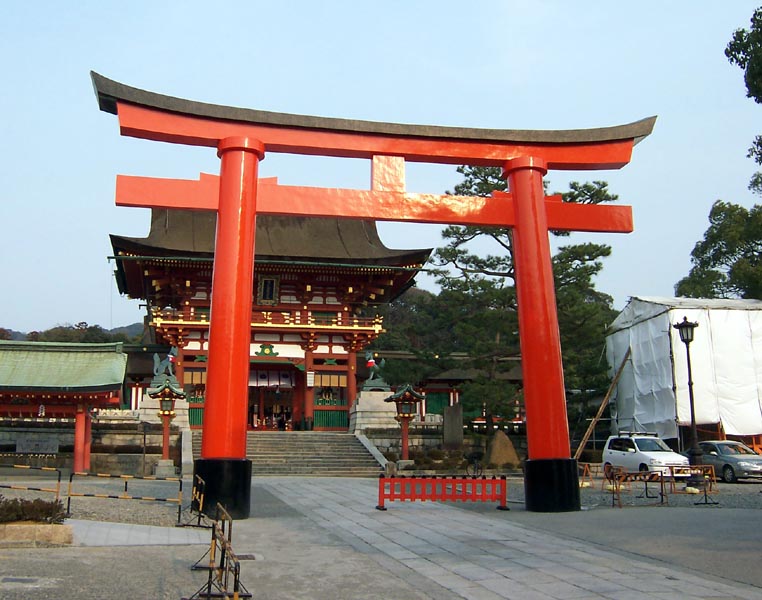
Over that long span, the buildings burned down in the Onin War (1468), and the present main hall was rebuilt in 1499. The great vermilion romon gate at the entrance is said to have been donated by the warlord Toyotomi Hideyoshi, reportedly in a prayer for his mother’s recovery from illness — a sign of a shrine that has received the wishes of everyone from rulers to ordinary people.
Climbing Mount Inari
If you have the time and energy, try the climb up Mount Inari. Walking through tunnels of gates to the 233-meter summit is a loop of about 4 kilometers and 2 to 3 hours. Reach the Yotsutsuji intersection about halfway up and a sweeping view over Kyoto opens before you.
The mountain path is quieter than you’d expect, as if the crowds at the base were a different world. Walking among vermilion gates and deep green, you feel that this is not just a sightseeing spot but a sacred mountain. You don’t have to reach the top — turning back at Yotsutsuji is plenty rewarding.
Gate-town food: quail and inari-zushi
Before or after your visit, snacking along the approach is part of the fun. Fushimi Inari’s signature is grilled quail and sparrow — a traditional dish fitting for a god of agriculture (small birds that eat rice), and a rarity you’ll find few other places.
The other is inari-zushi: vinegared rice stuffed into a sweetly simmered pouch of fried tofu. Because fried tofu is said to be the fox’s favorite food, this sushi is deeply tied to Inari shrines — and it even shares the name “Inari.” Eaten here at the head shrine, it tastes all the better.
Practical visitor information
Access could hardly be easier: step off at JR Nara Line’s Inari Station and the shrine is right in front of you (the Keihan Line’s Fushimi-Inari Station is a few minutes’ walk). Entry is free, and the shrine is open 24 hours. The best times are early morning (ideally before 7–9 a.m.) or evening, when you can photograph the tunnels of gates with few people around. If you plan to climb, wear comfortable shoes and allow 2 to 3 hours. Check official information before you go.
In closing
Fushimi Inari is not simply a place of beautiful gates. As the head shrine of every Inari shrine in Japan, the prayers of countless people hoping for prosperity have become vermilion gates that blanket the mountain, and the foxes carry those wishes to the god. Walk knowing this, and each gate — even the fox’s mouth — looks different. Slip through the quiet corridor at dawn, look down over Kyoto from Yotsutsuji, and bite into inari-zushi on the way back. Consider adding a half-day like this to your next Kyoto trip.


_-_079.jpg)

.jpg)
コメントを残す