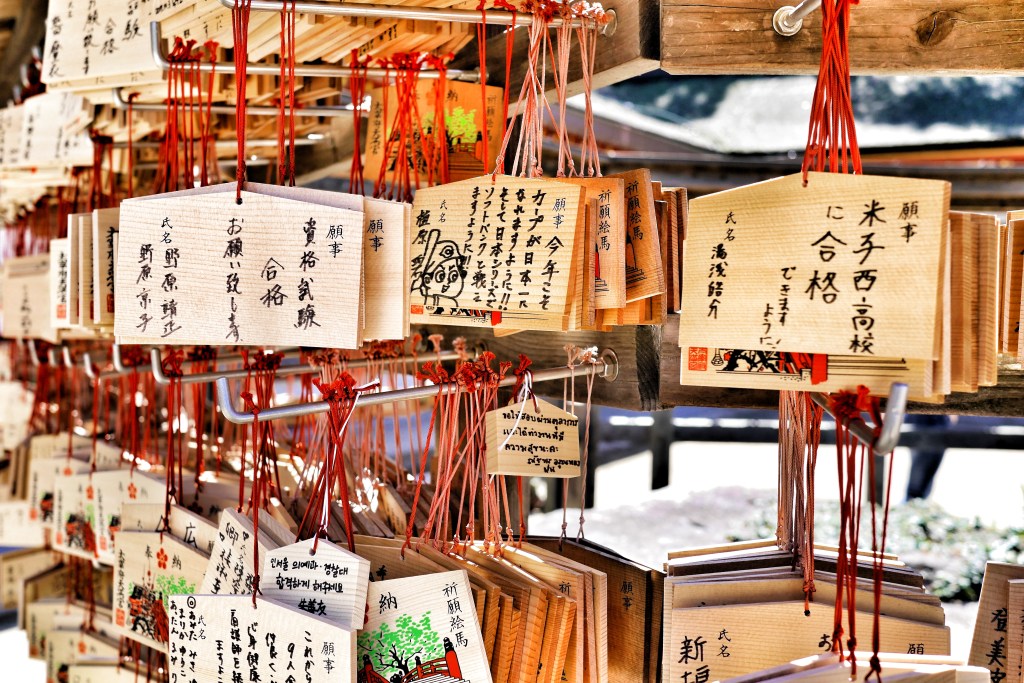
Walk into almost any shrine or temple in Japan and you will meet them twice. Near the offering hall, a counter glows with rows of small brocade pouches in every colour. A few steps away, hundreds of little wooden boards hang from a rack, clattering softly in the wind, each one covered in handwriting. These are omamori (protective amulets) and ema (votive plaques), and to most visitors they look like the gift-shop end of a sacred place.
They are not. An omamori is a portable piece of the sacred that you carry away with you, and an ema is a written prayer that you deliberately leave behind. Both grew out of very old ideas about how humans ask something of the gods, and both quietly carry a history that runs back more than a thousand years. This guide explains what they actually are, where they come from, and how to use them the way a Japanese worshipper would.
In this article
- Carried away, or left behind
- What is an omamori?
- A charm for every wish
- Why an omamori lasts about a year
- What is an ema?
- From living horses to painted plaques
- How to write and offer an ema
- Trivia: the horse hidden in the word
- Related reading
Carried away, or left behind
Omamori and ema are easy to treat as souvenirs because money changes hands and you get to keep something pretty. But in Japanese religious life they do almost opposite jobs. An omamori is designed to travel: you buy it, carry it in a bag or pocket, and let it stay close to you for months. An ema is designed to stay: you write your wish on it and hang it at the shrine, leaving it in the care of the kami (the gods or sacred spirits of Shinto) or the buddhas.
Both also cross the line that visitors are usually taught to draw between Japan’s two religions. You will find omamori and ema at Shinto shrines and at Buddhist temples alike. That overlap is not sloppiness. For over a thousand years the two faiths were fused together in a system called shinbutsu-shugo, the combination of kami and buddhas, and everyday customs like these never fully separated again. When you buy a charm at a temple and an almost identical one at a shrine, you are holding a small piece of that shared history.
What is an omamori?
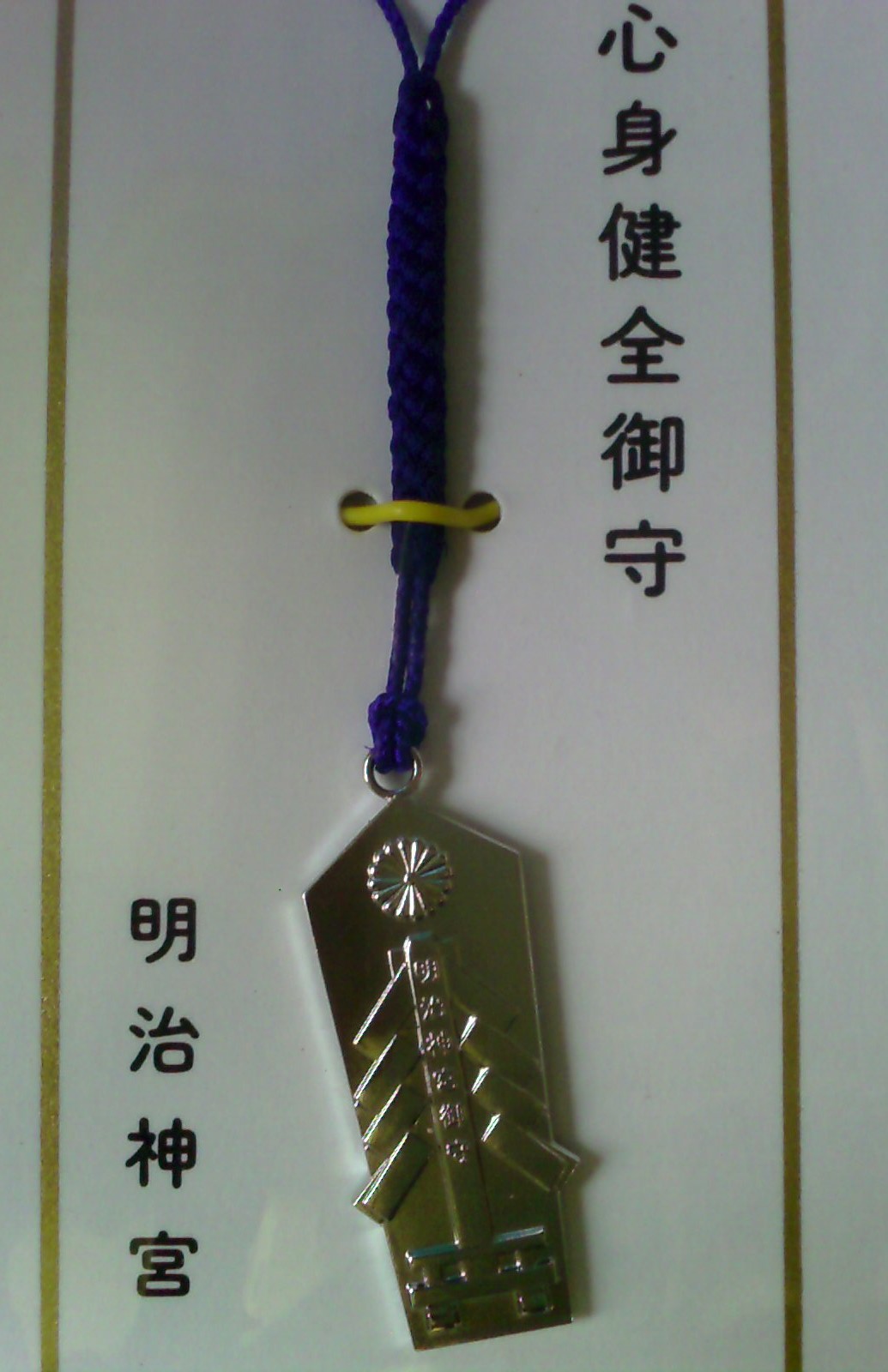
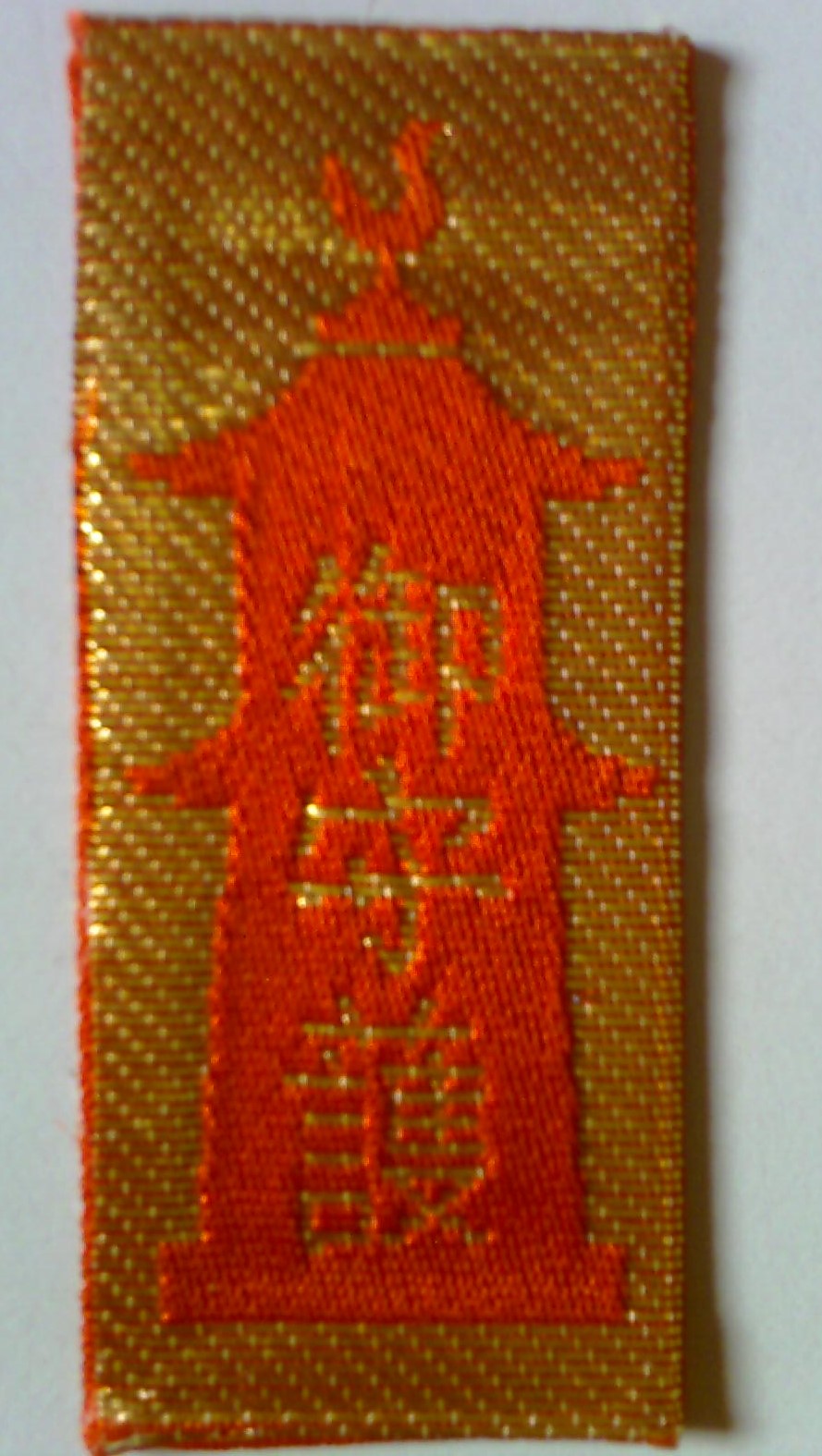
The word omamori comes from the verb mamoru (to protect), with the polite prefix o-. So the name simply means “an honourable thing that protects.” What most people picture is the outer form: a small drawstring bag of coloured brocade, often stitched with the name of the shrine or temple and a wish such as safe travel or good health.
The bag, though, is only the wrapper. Inside is the part that actually matters: a slip of paper or a thin piece of wood inscribed with a prayer, an invocation, or the name of the enshrined deity. In a Shinto omamori this inner object is treated as a go-shintai, a vessel that holds a portion of the kami’s spirit; in a Buddhist one it relates to the gohonzon, the main object of devotion in that tradition. In other words, an omamori is a miniature, portable version of the sacred object you would otherwise have to visit in person.
This is why there is one firm rule: do not open it. Custom holds that unsealing the bag lets the blessing escape and leaves you with an empty pouch. Whether or not you take that literally, opening an omamori misunderstands what it is. The charm works precisely because the sacred inner slip stays wrapped, carried, and undisturbed.
Historically, the omamori is a cousin of the ofuda, a paper or wooden talisman that a household keeps on its kamidana (a small home altar shelf). The ofuda protects a whole house from a fixed spot; the omamori shrinks that same idea down to something you can slip into a wallet. Scholars trace the portable, mass-produced charm we know today to the Edo period (1603–1868), when printing made them cheap and city dwellers in particular took up the habit of carrying one.
A charm for every wish
Japanese religion is famously practical. Alongside lofty ideas about the afterlife, both Shinto and Buddhism openly promise genze riyaku, meaning “benefits in this present world.” Omamori are the neatest expression of that outlook: rather than one all-purpose charm, shrines and temples offer a whole menu, each aimed at a specific need. The blessing a charm carries is called its goriyaku (its divine benefit).
Common types you will see include:
- Gakugyo-joju – success in study and exams, hugely popular with students.
- Kotsu-anzen – safety in traffic and travel, often bought for a car or a new driver.
- En-musubi – the tying of good bonds, especially in love and marriage.
- Anzan – a safe and easy childbirth.
- Yaku-yoke – warding off misfortune and bad luck.
- Shobai-hanjo – prosperity in business.
- Kanai-anzen – safety and harmony for the whole household.
- Kaiun – a general turn toward better fortune.
The choice of charm is often tied to what a particular place is famous for. At Dazaifu Tenmangu, which enshrines Sugawara no Michizane as Tenjin, the god of learning, the exam-success omamori is the signature item, and students buy them by the thousand before entrance-test season. At Izumo Taisha, long associated with the forging of relationships, the love-and-marriage charm is the natural choice. Matching the shrine to the wish is part of the point.
Why an omamori lasts about a year
An omamori is not thought of as permanent. Custom holds that its protective power fades over roughly a year, and that it also absorbs the misfortune it has been shielding you from. For both reasons, the usual practice is to return the old charm to a shrine or temple after about twelve months and receive a fresh one. Many people do this at New Year, when they visit for hatsumode, the first shrine visit of the year.
You do not simply throw an omamori in the bin. Most shrines set out a collection box, often called a koshinsatsu osamesho (a place to return old charms and talismans), where used omamori, ofuda, and other sacred items are gathered. They are later burned in a purification fire as a mark of respect to the deity, frequently at a New Year rite. Ideally you return a charm to the same place you received it, but returning it to another shrine, or a Buddhist charm to a temple, is generally accepted. If you have carried an omamori home from Japan, it is completely fine to keep it as a memento; there is no obligation to fly it back.
What is an ema?
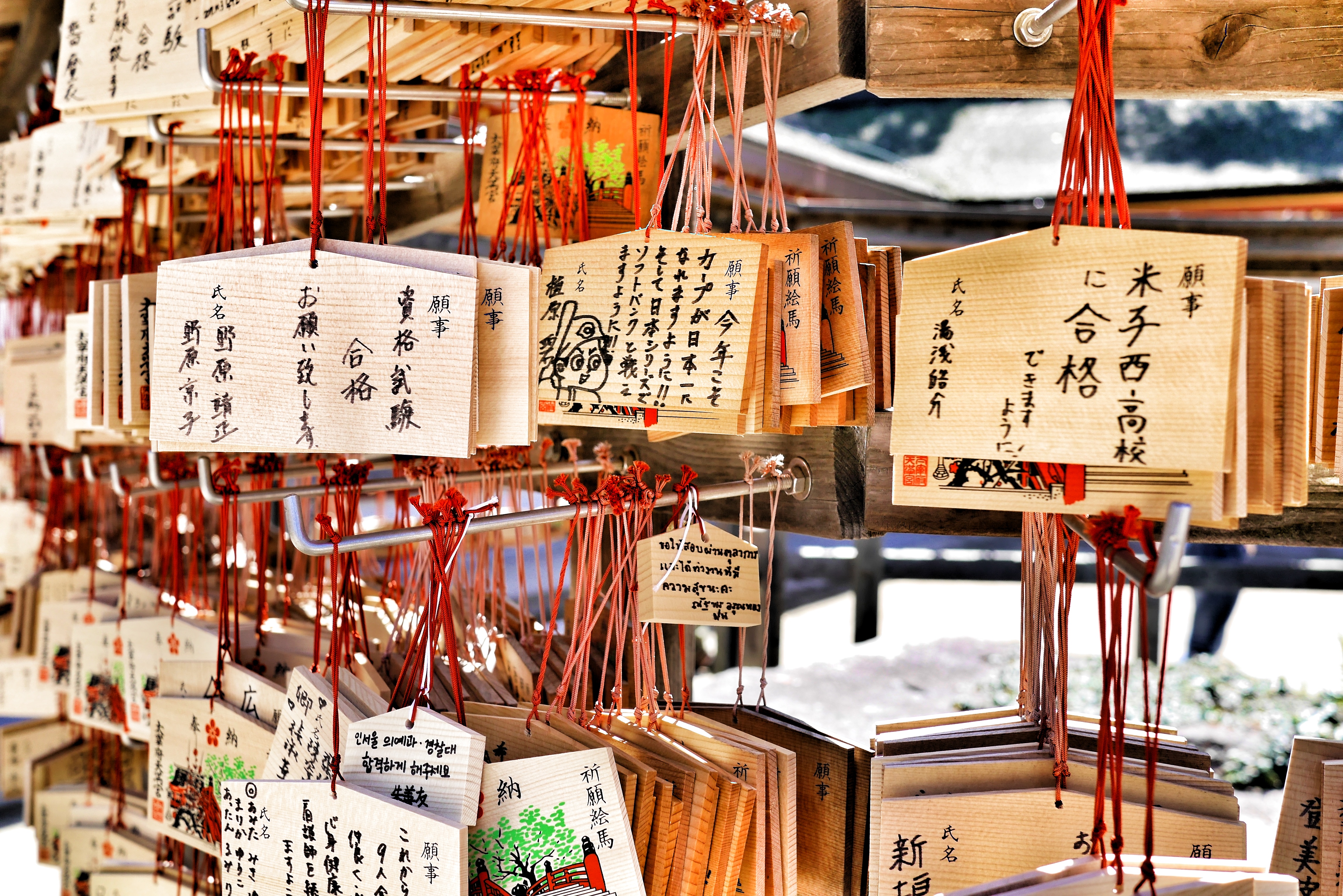
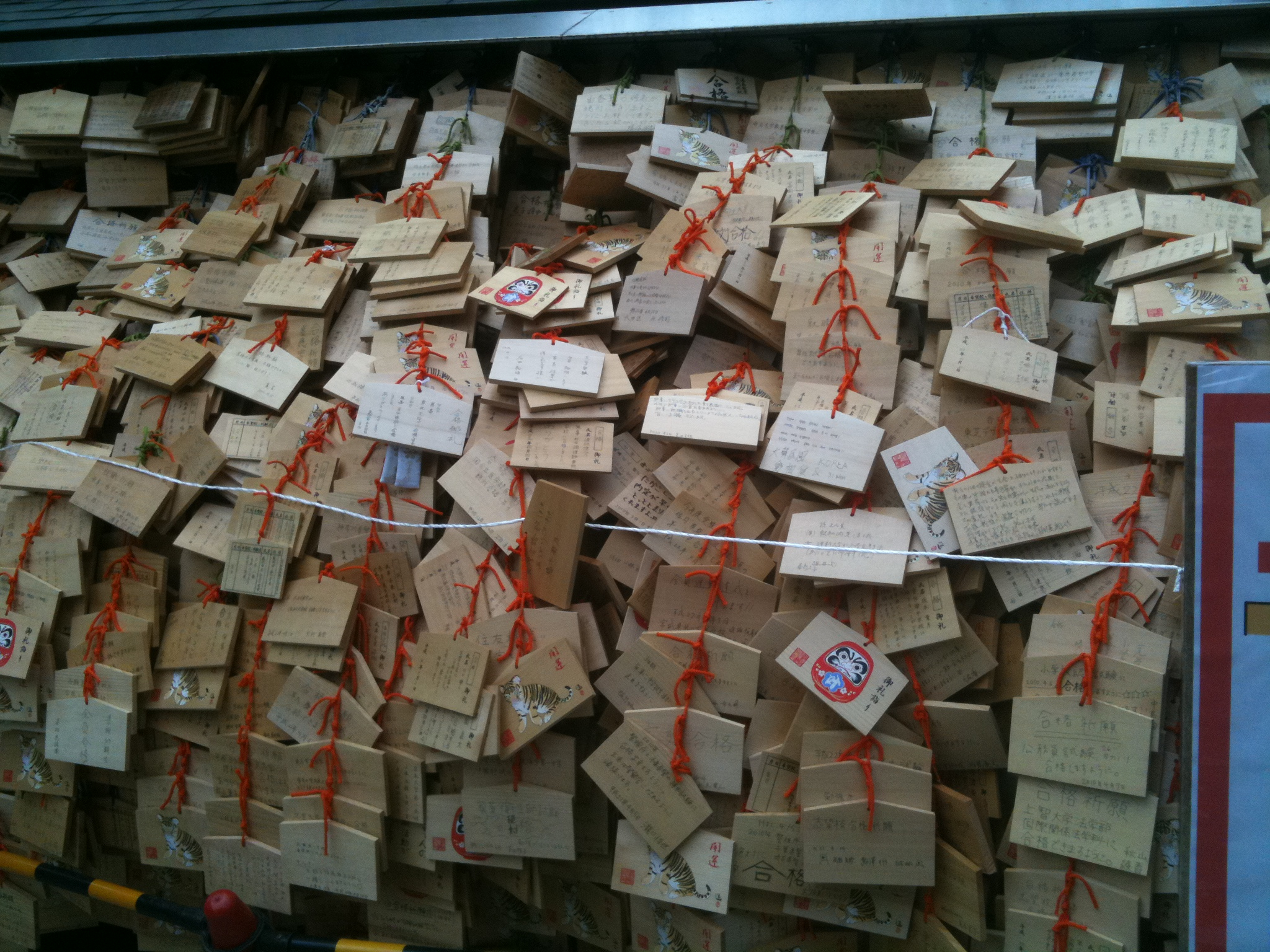
An ema is a small wooden tablet, usually about the size of a postcard, that you buy at the shrine or temple, write a wish on, and hang on a rack set aside for the purpose. Modern examples are commonly around 15 centimetres wide and 9 centimetres tall. One face is decorated, often with the shrine’s emblem or the animal of the current zodiac year, while the wish is written on the plain reverse.
Where an omamori is private and portable, an ema is public and permanent. Once hung, your wish stays on display among hundreds of others, and it remains in the sacred precinct rather than in your pocket. Reading the racks is one of the quiet pleasures of visiting a shrine: prayers for a grandmother’s recovery hang beside hopes for a driving test, a football result, or world peace, in a dozen languages.
From living horses to painted plaques
The word ema is written with two characters: e (picture) and ma (horse). A “picture-horse” seems a strange name for a wishing board until you follow the history, which begins not with wood but with real animals.
In ancient Japan the horse was regarded as a mount of the kami, a creature on which a god could ride into the human world. Donating a live horse (a shinme, or sacred horse) to a shrine was therefore one of the most serious offerings a person could make, and it was used above all in prayers about the weather during droughts and famines. The tenth-century law code known as the Engishiki records the logic plainly: one should offer a black horse when praying for rain, and a white horse when praying for the rain to stop.
Live horses, however, were extraordinarily expensive, and a shrine could hardly stable every animal it was given. So substitutes appeared. As early as the Nara period (710–794), worshippers offered horse figures made of clay or wood in place of the real thing. From there it was a short step to simply painting a horse on a wooden board. One of the earliest written references to such a substitute comes from the Honcho Monzui, an eleventh-century collection (around 1012), which mentions paper horses offered at a Tenjin shrine.
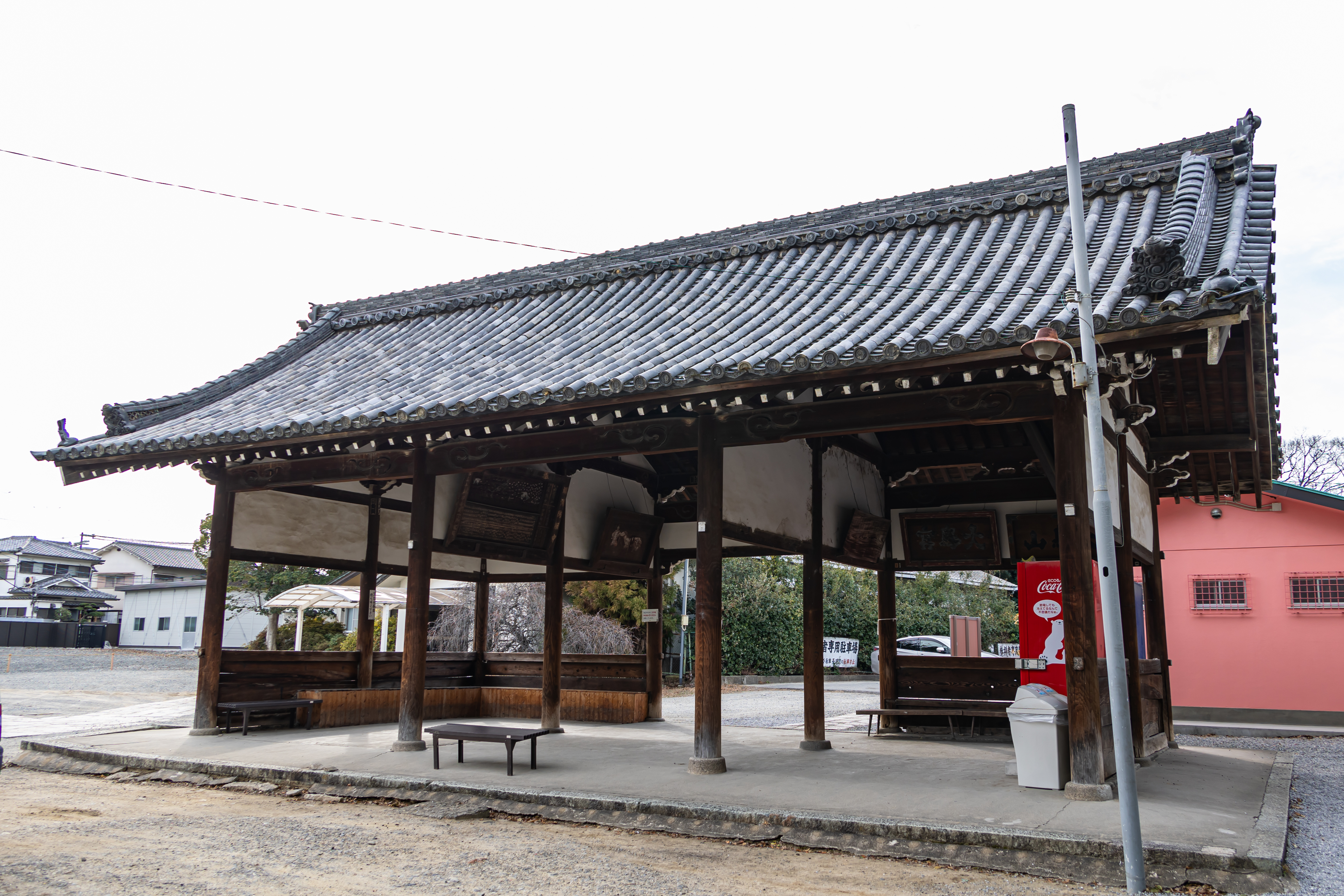
Once the offering was a painting rather than a beast, it could grow and change freely. During the Kamakura period (1185–1333) the custom spread into Buddhist temples as well as shrines. By the Azuchi-Momoyama period (1568–1603), powerful samurai were commissioning large, lavishly painted ogaema and dedicating them to important shrines and temples, where they were displayed in special open halls known as emado (ema pavilions). Subjects expanded well beyond horses to ships, legends, and portraits, and by the Edo period ema painting had become a recognised art form; even the great ukiyo-e master Katsushika Hokusai is known to have produced them.
The small personal ema that visitors write today is the democratic descendant of all this. The link to Tenjin runs deep: from the 1960s it became especially popular to dedicate ema at Tenmangu shrines while wishing for exam success, which is why the racks at places like Dazaifu are dense with the hopes of students. And the tradition keeps mutating. In recent decades ita-ema (“painful ema”), plaques hand-drawn with manga and anime characters, have appeared in large numbers at shrines linked to popular stories, a very modern echo of the artist-painted boards of the past.
How to write and offer an ema
Offering an ema is simple, and visitors are entirely welcome to take part. Buy a blank plaque at the shrine or temple office, then write your wish on the undecorated side. There is no fixed formula, but wishes are traditionally phrased in the present or as a clear hope, and many people add their name and the date. Writing in any language is fine; the kami are not thought to need Japanese.
When you are done, hang the ema on the wooden rack provided, not on trees or railings. That is the whole ritual. The plaques you leave are looked after by the shrine, and are gathered and respectfully burned in the same way as old omamori, an act often described as releasing the wish so it can travel to the gods. If you would like your visit to feel complete, it is worth learning the wider etiquette of approaching the offering hall first; our guide on how to visit a Japanese shrine walks through it step by step.
Trivia: the horse hidden in the word
The horse never entirely left the ema, even in art. A classical Noh play titled Ema stages the old belief directly: a divine figure hangs a black ema and a white ema at a shrine, the very pair once represented by living black and white horses in the rain and sun rituals of the Engishiki. Centuries after most worshippers stopped offering real animals, the theatre still remembered why a wooden wishing board is called a “picture-horse” at all.
Related reading
- What Is a Kami? Japan’s Gods and Sacred Spirits of Shinto – the beings an omamori carries a piece of, and an ema addresses.
- Dazaifu Tenmangu: The Shrine of Tenjin, God of Learning – where exam-success charms and ema are practically a national ritual.
- How to Visit a Japanese Shrine: Etiquette from the Torii Gate to the Prayer – the wider set of manners that surrounds buying a charm or offering a plaque.


コメントを残す