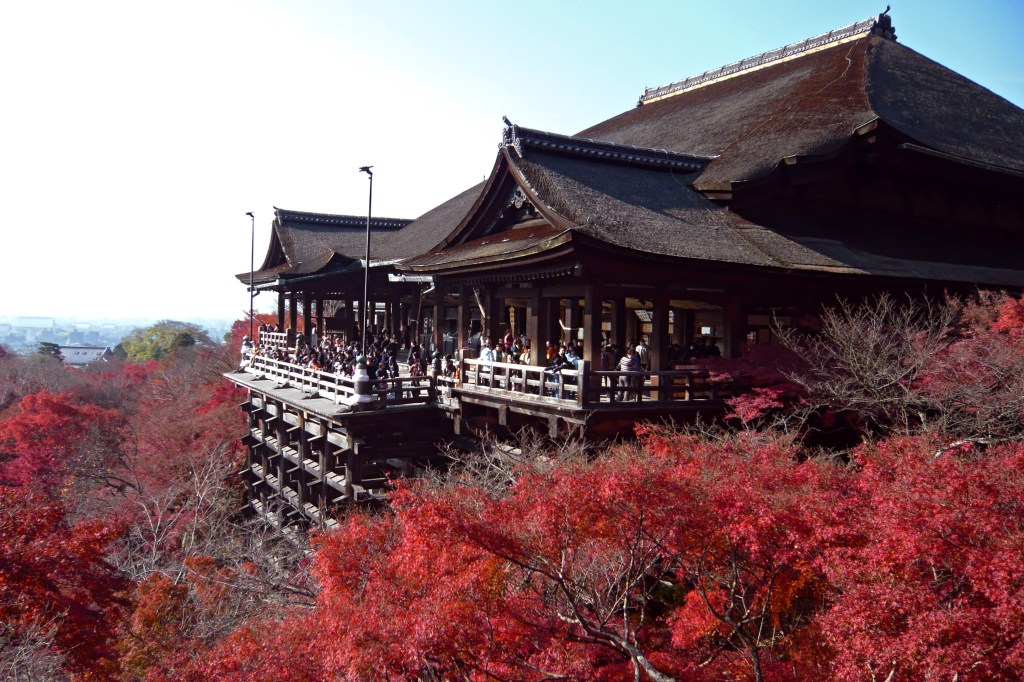
In Kyoto’s Higashiyama hills, a huge wooden stage juts out over the slope. Stand on it and Kyoto spreads out beyond a sea of maples and cherry trees. This is Kiyomizu-dera, a UNESCO World Heritage temple and one of Kyoto’s most beloved sights, with more than 1,200 years of history. This guide covers how to enjoy the stage and the wish-granting Otowa Waterfall, where the name comes from, and the food to try on the approach — everything that makes Kiyomizu-dera more fascinating.
In this article
- Overview: a World Heritage temple of Kyoto
- Highlights and must-see points
- The deity: the thousand-armed Kannon
- History: older than Kyoto’s capital
- The joys of a visit: the waterfall and the “leap”
- The approach: strolling Sannenzaka and Ninenzaka
- Practical visitor information
- In closing
Overview: a World Heritage temple of Kyoto
Kiyomizu-dera stands in Kyoto’s Higashiyama district and was registered as a UNESCO World Heritage Site (Historic Monuments of Ancient Kyoto) in 1994 — one of the city’s signature landmarks. Visitors come year-round from Japan and abroad, and the crowds swell especially in the cherry-blossom and autumn-leaf seasons.
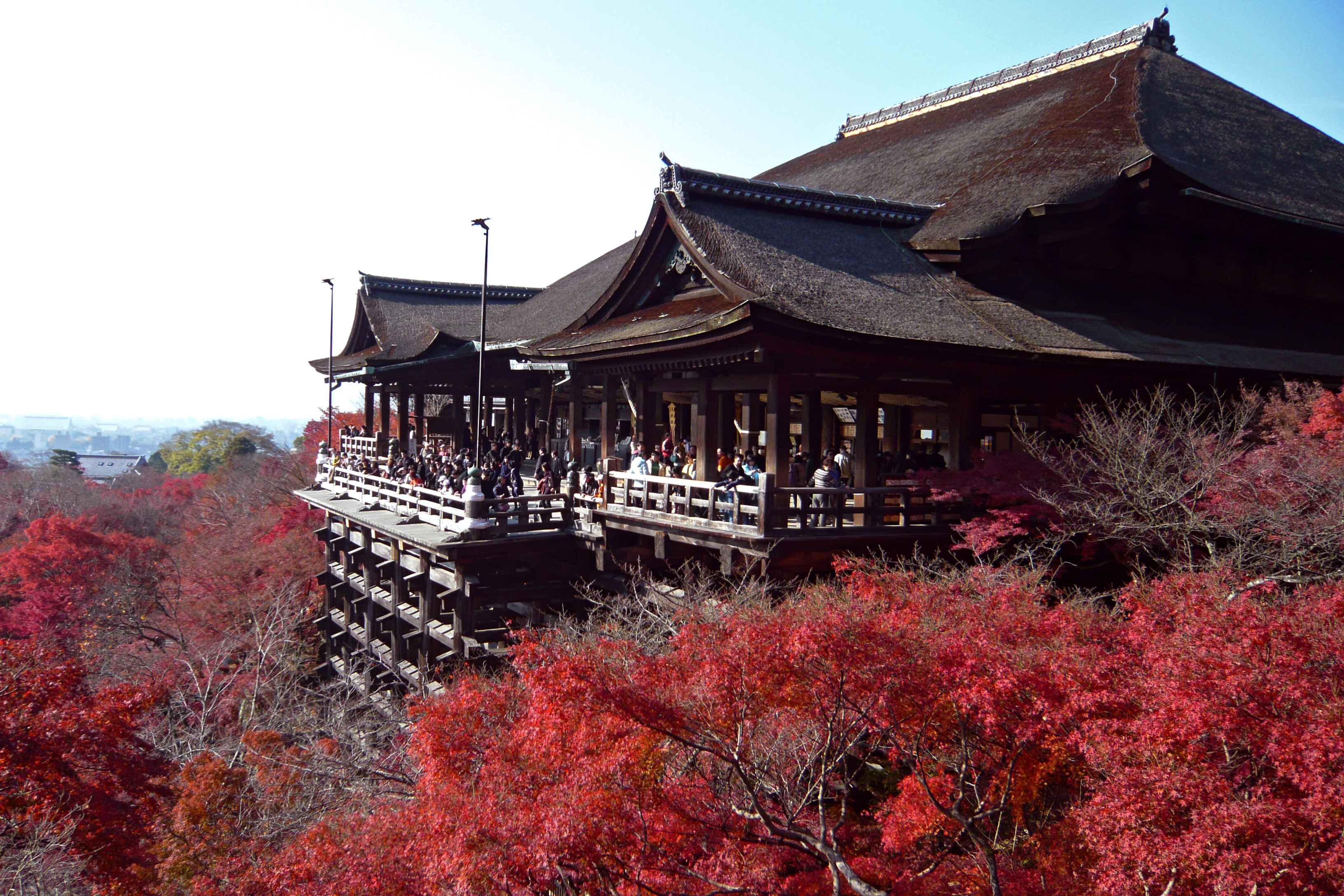
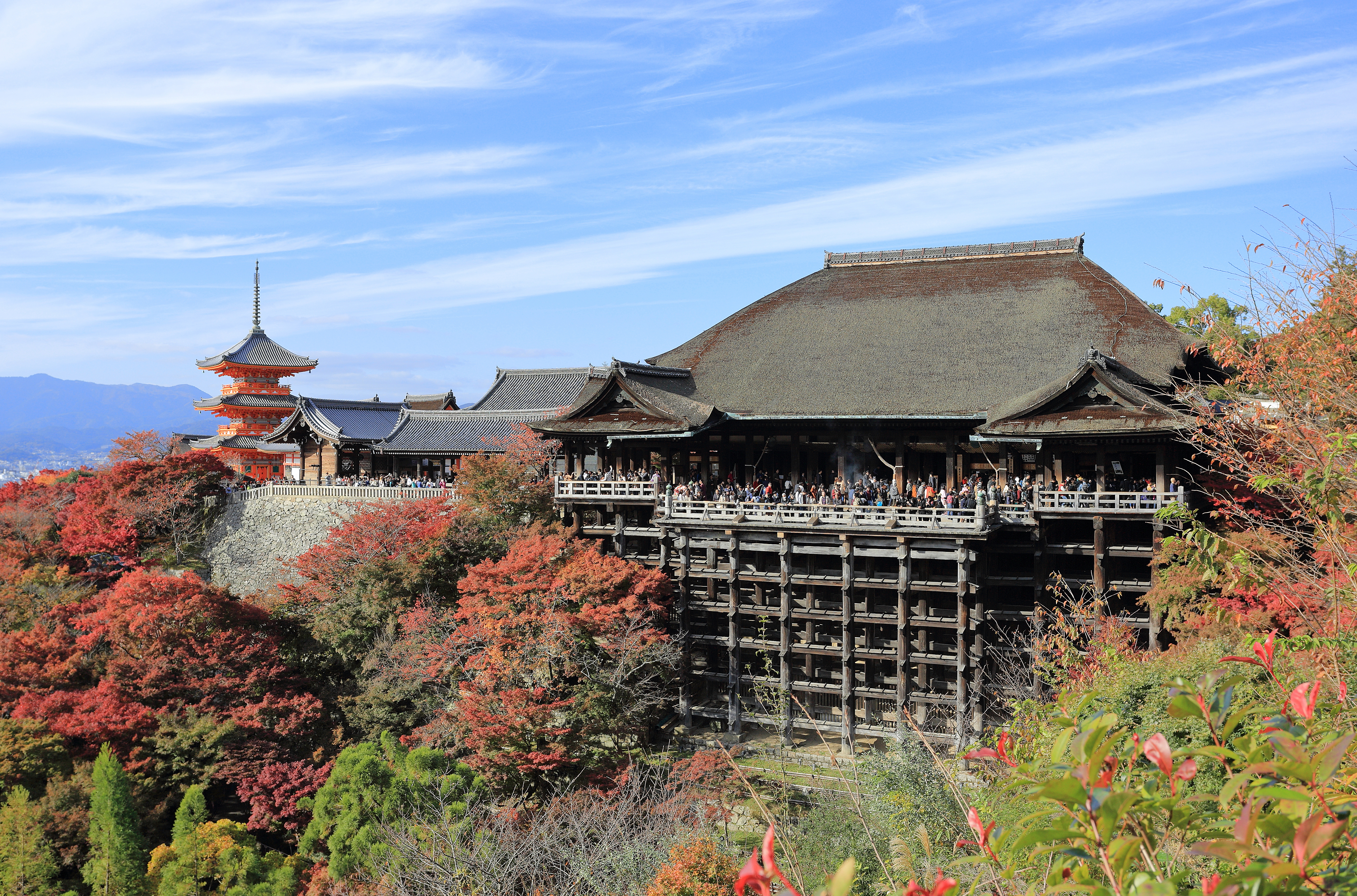
The temple sits on high ground at the top of a sloping approach, and its greatest sight is the wooden stage (butai, the projecting deck) thrust out over the cliff. The view from here is one of the highlights of any Kyoto trip.
Highlights and must-see points
The one thing you can’t miss is the Kiyomizu Stage, a wooden terrace about 13 meters high projecting from the front of the main hall. What’s astonishing is that this whole structure is held up by many thick pillars assembled without a single nail. From the stage you can see all of Kyoto and the trees that change color with the seasons.
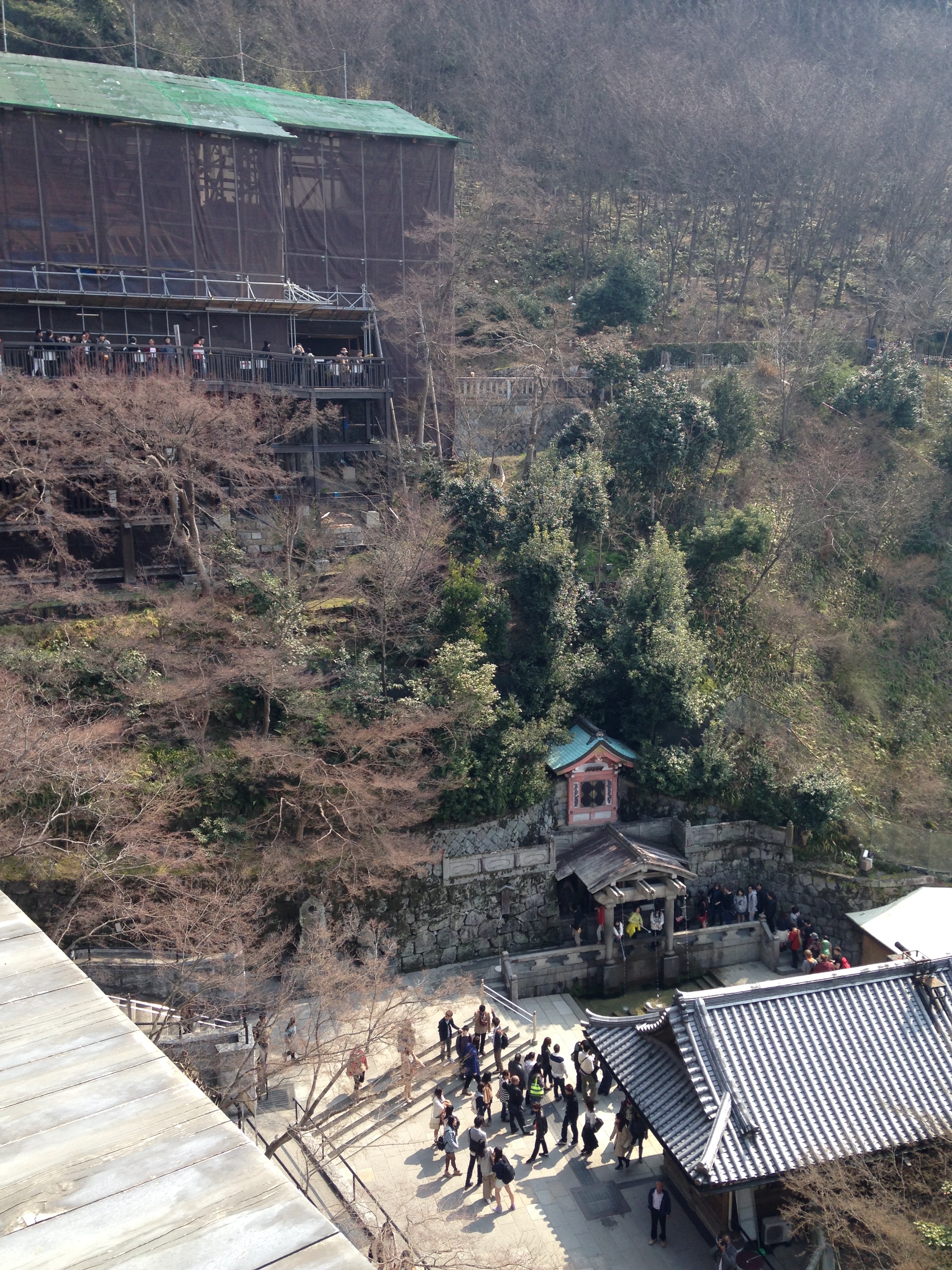
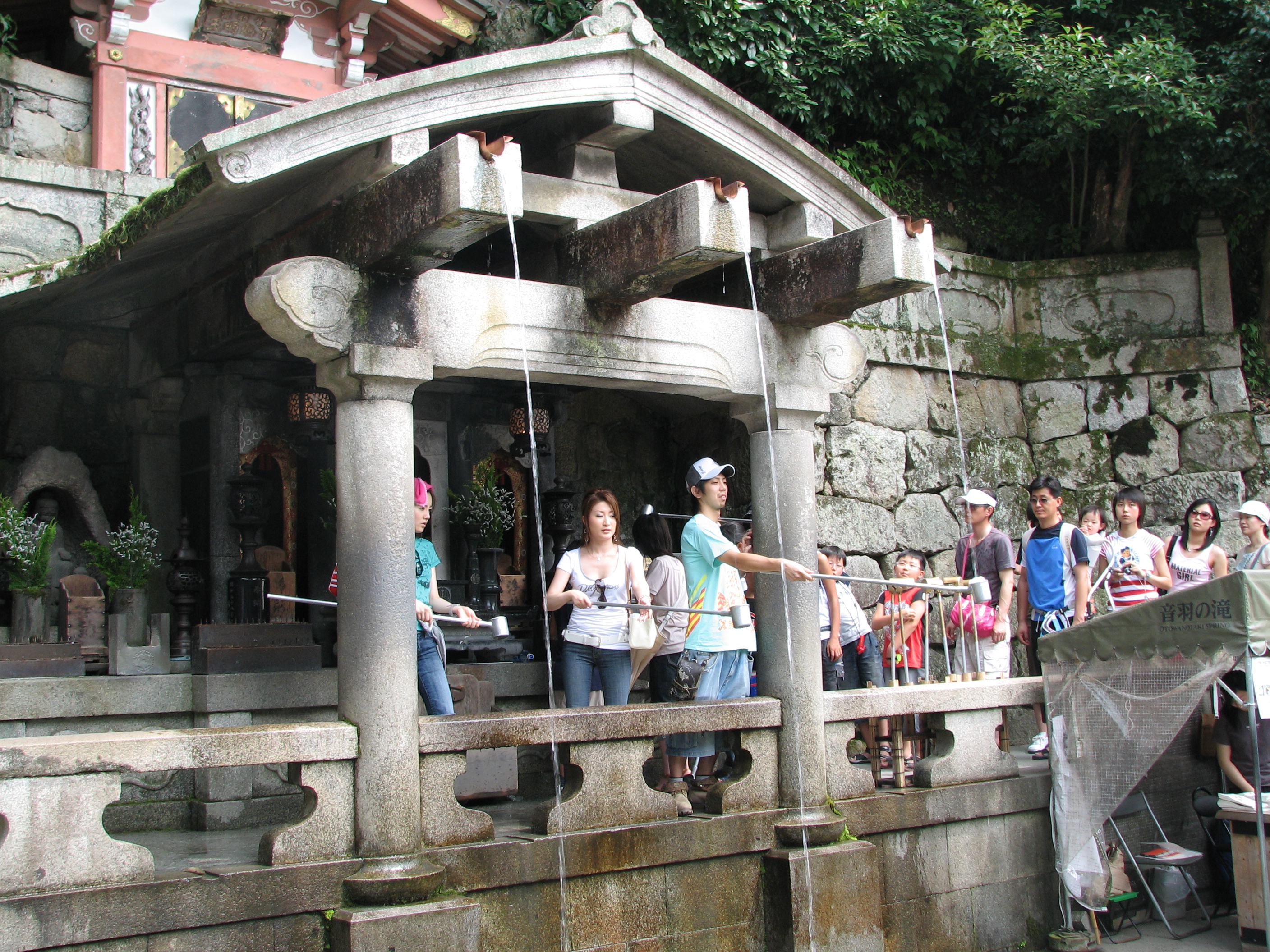
The other must-see is the Otowa Waterfall (Otowa-no-taki), the pure spring that gives the temple its name (kiyomizu means “pure water”). Its three channels are each said to grant longevity and health, success in studies, and success in love; you catch a mouthful with a ladle. It is considered greedy to drink from all three, so choose one wish.
Within the grounds is also Jishu Shrine (Jishu-jinja), dedicated to the deity of love and matchmaking. Its famous “love-fortune stones” sit 18 meters apart; if you can walk from one to the other with your eyes closed, love is said to come true. (Note: it has at times been closed for long-term renovation, so check before your visit.)
The deity: the thousand-armed Kannon
The temple’s honzon (its principal object of worship) is Senju Kannon (the thousand-armed Bodhisattva of compassion), said to save every kind of person with her thousand hands. This image is a hibutsu (a hidden buddha, normally never shown), revealed only once every few decades. Precisely because it is unseen, a prayer to the Kannon deep behind the stage feels all the more special.
History: older than Kyoto’s capital
Kiyomizu-dera began in 778, when a monk from Nara, guided by a dream, reached the pure spring here (the Otowa Waterfall) and enshrined Kannon. That is actually before Kyoto became the capital (Heian-kyo) in 794 — meaning Kiyomizu-dera is older than the city of Kyoto itself.
The grand main hall and stage you see today were rebuilt in 1633, donated by the third Tokugawa shogun, Iemitsu. Ever since, it has been loved as a place of Kannon worship and of leisure for ordinary people — then as now, one of the most crowded spots in Kyoto.
The joys of a visit: the waterfall and the “leap”
Take your time with the view from the stage, then catch a mouthful of the wish-granting water at the Otowa Waterfall. Experience these two and you’ve tasted most of what makes Kiyomizu-dera special.
Trivia — “leaping from the Kiyomizu stage.” In Japanese there’s a saying, “to do it as if leaping from the Kiyomizu stage,” meaning to make a bold, decisive move. Records show that in the Edo period a fair number of people actually did leap from the stage — about 13 meters high — praying to Kannon for their wish (it is of course forbidden today). Knowing the phrase, standing at the stage’s edge, the height feels a little different.
The approach: strolling Sannenzaka and Ninenzaka
The approaches to Kiyomizu-dera — Sannenzaka and Ninenzaka — are among Kyoto’s most beautiful lanes, with stone paving and traditional machiya townhouses. Souvenir shops and teahouses line the way, perfect for strolling and snacking: matcha (green-tea) ice cream and sweets, Kyoto pickles, and the local Kiyomizu-yaki pottery are a pleasure just to browse.
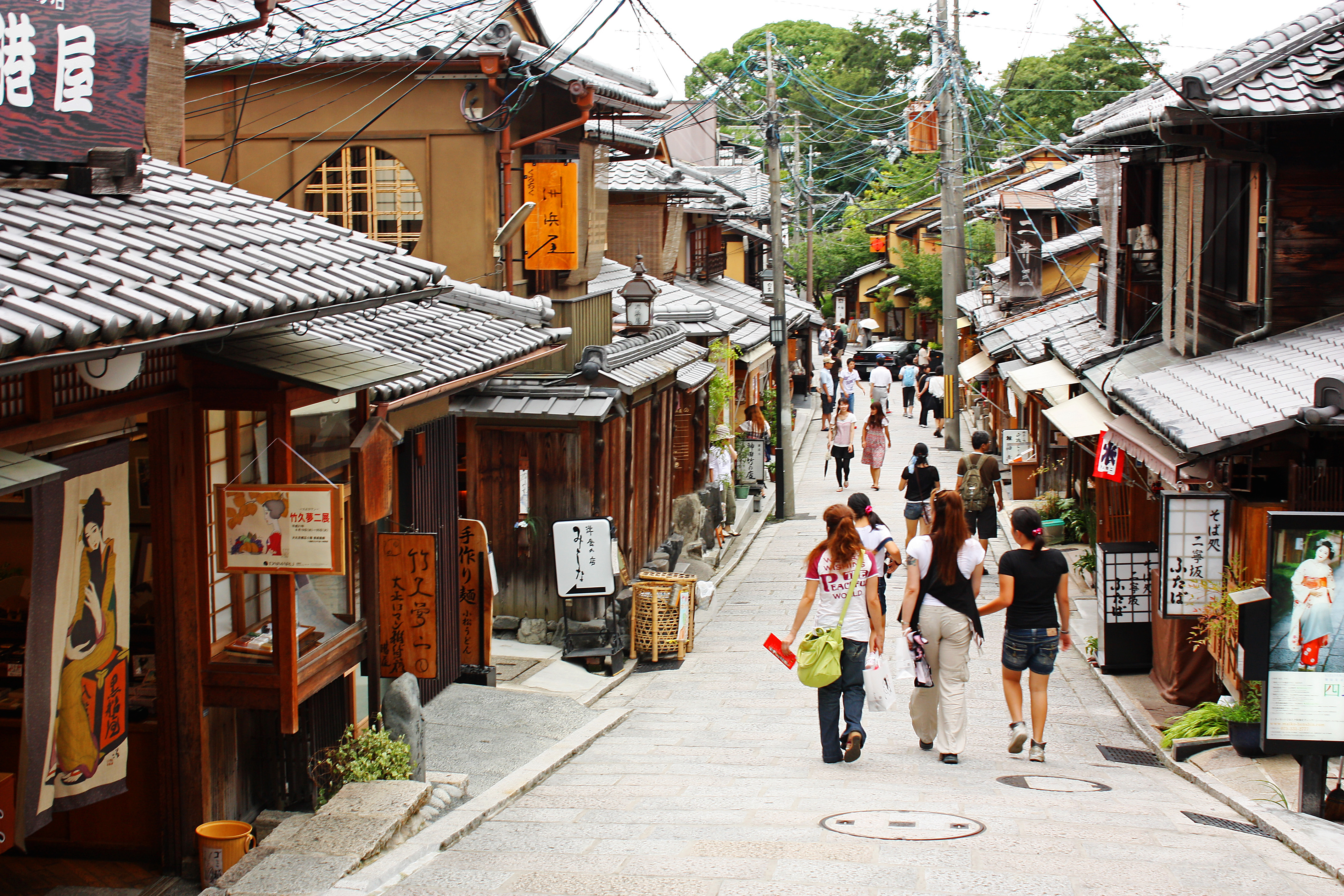
Early in the morning, Sannenzaka is quiet, as if the daytime crowds were imaginary. Walking the stone slope with few people around feels like slipping into an older Kyoto.
Practical visitor information
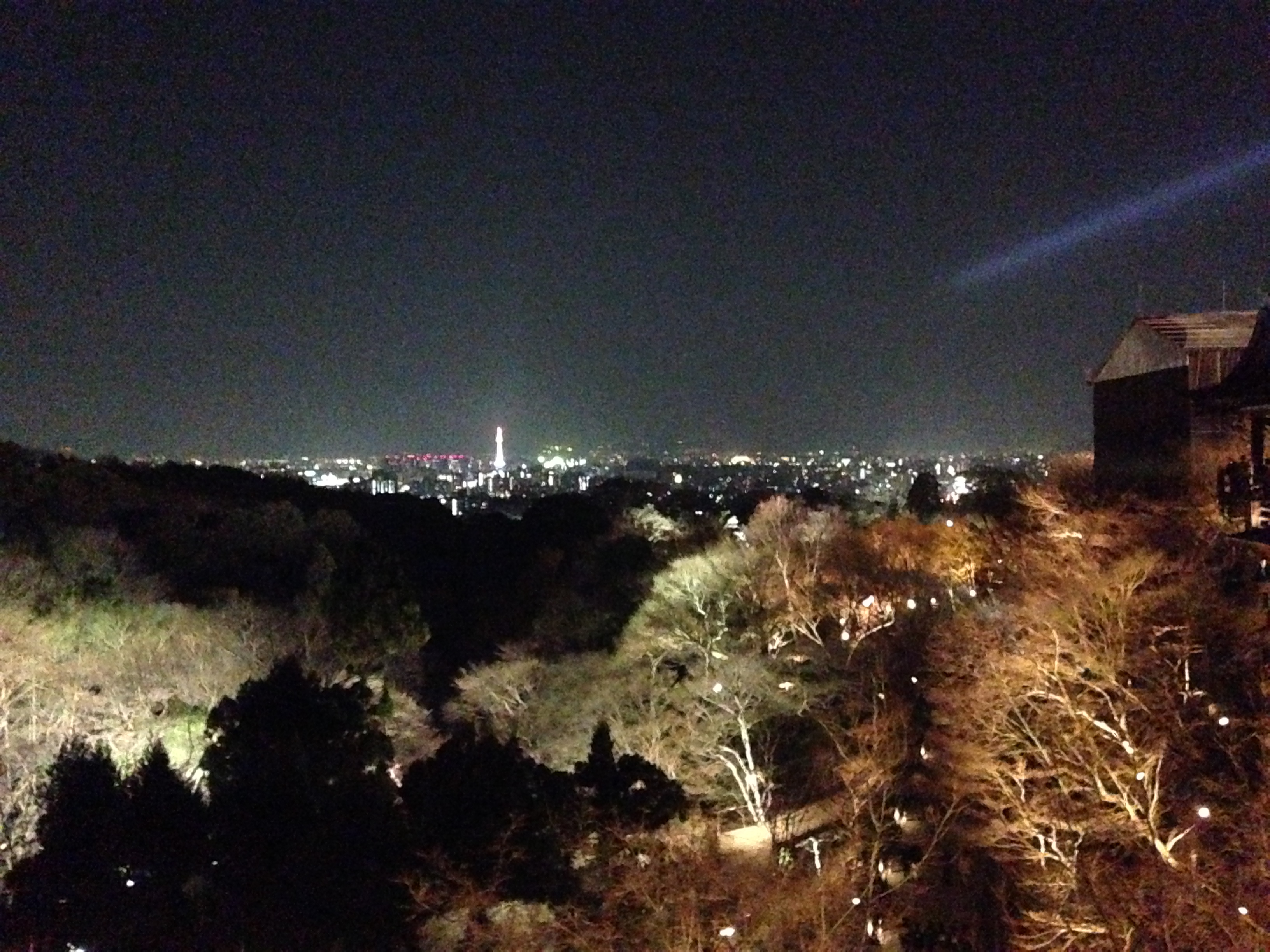
Unlike many shrines and temples, Kiyomizu-dera charges an admission fee for the main-hall area (a few hundred yen). The best time is early morning (the gates open around 6 a.m.), when it’s quiet and the photos are calm. The cherry blossoms (April) and autumn leaves (November) are especially lovely, and special evening illuminations are held in spring, autumn, and the Obon season. For access, take a city bus to the Gojo-zaka or Kiyomizu-michi stop and walk about 10–15 minutes uphill. Allow 1–2 hours to enjoy the stage, the waterfall, and a stroll down Sannenzaka. Check official information for hours, fees, and the status of Jishu Shrine before you go.
In closing
Kiyomizu-dera is more than a scenic temple. It carries more than 1,200 years of history — older than the city of Kyoto — with a stage assembled on the cliff without a single nail, and pure water in which people have placed their wishes for centuries. That accumulation of prayer and craft is what holds up the view. Knowing the background, standing on the stage, the cityscape and even a single mouthful of the waterfall feel different. Climb a quiet Sannenzaka at dawn and look down over Kyoto from the stage — consider adding a morning like this to your next Kyoto trip.


.jpg)

コメントを残す